Why Bellevue Sees Medtech Stocks Making a Comeback
Medtech stocks were among the losers of the AI boom for a long time. Bellevue Asset Management, however, believes the fundamental growth story remains intact and sees the first signs that a turnaround is already under way.
The AI boom has not only produced winners on the stock market. While billions flowed into semiconductor and technology stocks, other growth sectors came under pressure. This has been particularly pronounced in medtech.
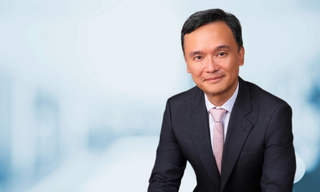
Bellevue Asset Management, however, believes there is more to the story. Speaking at an investor lunch in Zurich on Monday, Marcel Fritsch of Bellevue’s Medtech & Services team said: «The fundamentals remain very strong and, if anything, are becoming slightly stronger.»
In his view, the weakness was largely driven by capital flows. Many medtech investors have a strong affinity for technology and shifted money into semiconductor stocks as the AI boom gathered pace. Bellevue’s presentation shows a striking divergence between medtech and semiconductor stocks in 2026.
AI Boom Drew Capital Away
The impact has been significant. The sector’s long-term performance has weakened markedly. According to Fritsch, the annualized ten-year return still stood at around 13.2 percent in mid-2024. It has since fallen to around 6.2 percent.
Bellevue does not see this as evidence that the sector’s structural growth story has broken down. Instead, it believes a disproportionate amount of capital moved out of medtech and into the biggest beneficiaries of the AI boom.
That trend may now be starting to reverse. According to Bellevue, medtech has outperformed the Nasdaq 100 by around 10 percentage points since July. Meanwhile, the sector’s year-to-date performance improved from minus 22 percent in May to minus 11 percent in August.
«We believe there has been some normalization in AI-driven stocks,» said Fritsch. Some of the gains made in those stocks have been realized, with part of that capital flowing back into medtech.
Growth of 6 to 7 Percent
For Bellevue’s investment case, however, short-term sector rotation is less important than operating performance.
Analysts continue to expect the global medtech market to deliver organic revenue growth of around 6 to 7 percent a year through 2030. Bellevue identifies three main drivers: innovation, broader reimbursement for medical treatments and demographic development.
«Innovation could lead to somewhat faster growth in the sector from 2027 onwards,» said Fritsch.
Stefan Blum already sees the next generation of so-called blockbuster markets taking shape. Bellevue deliberately focuses its investment strategy on areas that are growing significantly faster than the market as a whole.
Established growth areas include continuous glucose monitoring, robotic-assisted surgery, new treatments for cardiac arrhythmias and minimally invasive procedures for structural heart disease.
The next blockbusters are emerging
Bellevue is already looking beyond these established areas. Potential next-generation blockbuster markets include renal denervation for the treatment of high blood pressure, continuous potassium sensors, new treatments for type 2 diabetes and new radiotracers for PET imaging. Bellevue estimates that blockbuster markets could account for around 30 percent of future revenue growth in the global medtech market.
Blum sees particularly strong potential in renal denervation. The procedure involves treating overactive nerves around the kidneys using a minimally invasive catheter intervention in order to lower blood pressure.
The market remains small for now. However, Bellevue expects it could grow from around USD 40 million in 2025 to nearly USD 1.2 billion by 2030. Insurance reimbursement will be a key factor. According to Bellevue, reimbursement coverage in the US currently stands at around 55 percent and is expected to exceed 80 percent by 2030.
A sensor for glucose and potassium
Another market could become even larger: continuous potassium monitoring.
Elevated potassium levels pose a significant risk, particularly for patients with chronic kidney and cardiovascular diseases. New sensors are expected to make it possible to monitor both glucose and potassium continuously and in real time.
Bellevue points to Dexcom, among others. A combined sensor of this kind is expected in the first half of 2028. Bellevue estimates the long-term revenue potential for continuous potassium sensors at up to USD 14 billion – a market size that could approach that of continuous glucose monitoring today.
For Blum, an important factor is that many potential patients are already familiar with continuous glucose sensors. This could give providers access to an existing customer base for additional applications.
Baby boomers are reaching a pivotal age
Demographic trends provide another tailwind. Blum argues that an investment theme that has been discussed for decades is now increasingly showing up in actual treatment volumes.
«Now that it is actually happening, you really start to notice it,» he said, referring to the baby boomers. In 2026, the first members of this generation turned 80 – an age at which healthcare spending and the number of medical procedures increase significantly.
Broader reimbursement could provide an additional boost to demand. In Bellevue’s view, new medical procedures can only achieve broad adoption once they not only deliver convincing clinical results but are also covered by insurers.
Valuations at a historic discount
Despite this growth potential, the sector is currently trading at comparatively low valuations.
According to Fritsch, medtech currently trades at a discount of around 11 percent to the S&P 500. Historically, by contrast, the sector has typically traded at a premium of around 15 to 20 percent. Its forward P/E ratio for the next twelve months stands at around 19. Bellevue puts the historical average at 23.9 and the pre-pandemic level at around 27.
Bellevue believes the rise in M&A activity shows that current valuations are also attracting strategic buyers.
In August, Curium announced the acquisition of Lantheus for around USD 8 billion. At the same time, KKR is acquiring Integer Holdings for around USD 5.7 billion. Several other major strategic transactions have also taken place in the sector.
For Fritsch, the arrival of private equity sends a particularly strong signal: «When private equity starts buying medical technology companies, it is certainly not because they are excessively expensive.»
Bellevue itself invests predominantly in established large companies. Around 97 percent of its Medtech & Services portfolio is invested in large caps. For the companies in its portfolio, the asset manager expects average annual revenue growth of just under 8 percent and earnings-per-share growth of about 13 percent between 2025 and 2030.