Argentina: Citizenship for 350,000 Dollars
Argentina's free-market president is doubling down on his reform agenda. From the end of the year, the country is opening its doors to investment migration. Industry insiders see the passport mainly as an emergency exit for times of crisis.
Argentina has unveiled the details of its new citizenship-by-investment program. Economy minister Luis Caputo and cabinet chief Diego Santilli presented it at the «Argentina Week» in Paris.
Applications are set to open in the fourth quarter of 2026, according to a press release by Henley & Partners.
There are two routes to a passport: a non-refundable contribution of $350,000 to the treasury, or a subscription to a purpose-built government bond worth $800,000. The government promises due diligence in line with the standards of the OECD and the Financial Action Task Force (FATF), including checks on the source of funds, criminal records, and reputation.
Twice the Price of the Caribbean
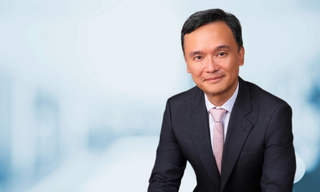
«The program is comparatively attractive,» Philippe May told finews.com. He is chief executive of EC Holdings, a Singapore-based residence and citizenship advisory firm, and previously headed Arton Capital in Singapore.
By his estimate, the cost runs at roughly twice that of a small Caribbean nation. Argentina is hardly suitable as a tax domicile for wealthy new citizens, May says. Its passport, however, works well as a «Plan B» – a fallback in case of crisis.
Preppers and Weak Passports
The government has not singled out any target groups by country or industry. May therefore expects a mixed field of applicants, starting with nationals of poorer countries holding weak passports who are chiefly after visa-free travel.
Then there are European and American «preppers» bracing for crisis scenarios – up to and including a third world war. Anyone genuinely intent on emigrating to Argentina, by contrast, hardly needs the program.
Workshops and a Canceled Tender
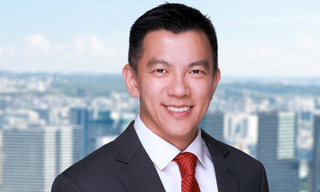
Henley & Partners emphasizes that it held a series of constructive workshops and talks with the Argentine government. Chief executive Juerg Steffen is quoted as saying the country has considerable strengths, and that the firm aims to raise the program's international profile.
According to May, there was a public tender for advisory firms, and a consortium was selected. In the spring of 2026, however, the decision was annulled.
«Based on the publicly available information on similar programs and the insights gained during the bidding process, the government was quite capable of building this program largely on its own,» he says.
Two Doors, One Strategy
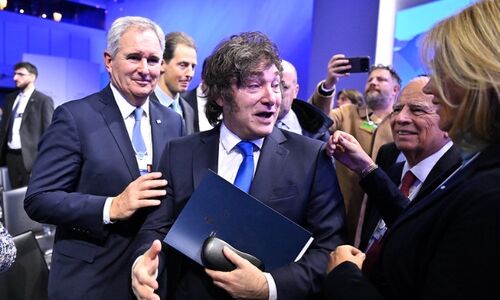
Henley explicitly positions the passport as part of the Argentine government's natural-resources strategy. In September, President Javier Milei used his address to the UN General Assembly to highlight the country's critical minerals alongside its energy potential, the press release notes.
The program's significance reaches «beyond the realm of citizenship,» says Philippe Amarante, who heads government advisory at Henley. Argentina's strengths in energy, critical minerals, food production, technology, and human capital give it an unusually broad platform to attract internationally mobile capital, he argues.
Glencore Digs Deeper
For the big money in mining, however, the government has created a separate instrument: the Incentive Regime for Large Investments (RIGI), which guarantees major projects tax, customs, and regulatory stability for 30 years. Zug-based commodities giant Glencore shows how it works.
On the same day Henley announced the passport program, Glencore received RIGI approval for its MARA copper project in Catamarca, budgeted at around $4 billion. A further $9.5 billion is earmarked for El Pachón in San Juan.