
Mapping Millennial and Gen Z Behavior Around Money and Mobility
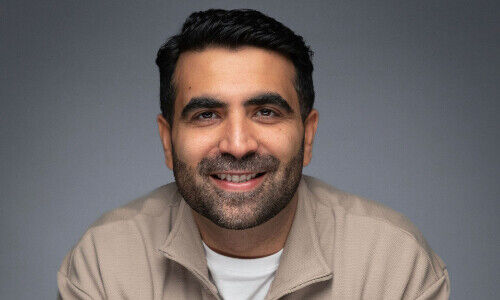
«Wealth is no longer just what you own. It is how quickly you can move, adapt, and recompose your life,» writes global mobility entrepreneur Nirbhay Handa in his new book «The Borderless Generation», debuting this month.
In an AI and remote-first world, Millennials and Gen Z are approaching wealth differently. They don’t anchor identity to one country. They’re increasingly on the move, with «work from anywhere» accelerating and forecasts suggesting 35 million digital nomads will be part of the workforce. Rather than defaulting to a single place, they choose where to live and deploy capital with intent, structuring assets across borders to match the life they want to build.
As Nirbhay Handa puts it: «Wealth is not just transferring. It is repositioning.» He argues this generation grew up on the internet, a force that transcended geography and shaped a cohort of global citizens who are internet-first and territory-second. Handa calls them «Multipolitans», a concept reflected in the name of his venture, Multipolitan.
Playbook For Founders, Investors, And Creators
«The Borderless Generation»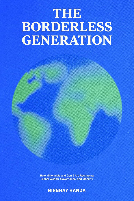 , published this month, brings together the forces reshaping how people design their lives, showing that today’s biggest shifts aren’t separate trends but one connected reality.
Handa explores how AI agents are becoming everyday tools, how digital assets are expanding what ownership can mean, and how mobility has evolved into a strategy through multi-homing and living beyond borders. He also examines internet-speed politics, where trust cycles compress, and institutional stakes rise, alongside the rise of «builder cities» that attract founders by reducing friction.
Written for founders, investors, and creators, the book offers practical frameworks for aligning money with belief and for choosing the cities, systems, and communities where people can thrive with intention.
Builder Cities Rising
Handa argues that cities are becoming the new pseudo-states as wealth and talent concentrate within cities, and startups are increasingly their lifeline. Without a steady pipeline of builders, he suggests a city risks becoming a museum of its past glory.
In that context, he believes the startup world is splitting into two kinds of winner cities: legacy titans and builder cities. Legacy hubs like San Francisco, Los Angeles, New York, and London still lead with deep venture capital and talent density. But as capital becomes more mobile, operational competence, especially entrepreneurial friction, matters more.
Builder cities are rising because they offer what founders value most: speed, clarity, and low friction, with Singapore, Dubai, and Abu Dhabi emerging as standout examples.
New Functional Peers
Looking ahead, Handa suggests the next decade will create new functional peers across the Gulf and beyond. He points to Riyadh alongside London, Doha alongside Luxembourg, and Manama alongside Liechtenstein, as private wealth expands and new financial capitals become necessary. This isn’t one city replacing another; it’s a more distributed global map where many financial centres will co-exist and where governance and infrastructure become decisive advantages.
In that sense, the next wave of financial centres will be modelled less on old-world legacy and more on the modern playbooks of Singapore and Dubai, with a significant cluster emerging across the Gulf. Handa also points to the rise of the employer-of-record industry as a signal of what comes next: a new wave of nomad-friendly cities where people keep working for companies in major financial or startup centres, while choosing to live where daily life is most convenient in a remote-first world.
Traditional Banking at a Crossroads
Handa argues that Millennials and Gen Z professionals worldwide are increasingly turning to UX-led fintech platforms for investing, even while traditional banks remain the default for salaries and everyday payments. He suggests traditional banking is vulnerable to disruption from neobanks, and that stablecoins could become a lifeline for the unbanked in developing markets where access to bank accounts remains limited.
In Singapore, he notes, many still bank conventionally for transactions, but increasingly build wealth through platforms like StashAway, Endowus, Chocolate Finance, and Saxo. He captures the shift with a line that’s both humorous and telling: The younger cohorts are «Swiping right for a better bank.»
Politics at Internet Speed
Handa argues that leadership is shifting as Millennials move into politics. He points to figures such as Crown Prince Mohammed bin Salman and Saudi Arabia’s Vision 2030, including the NEOM ambition, Nayib Bukele in El Salvador making Bitcoin legal tender, and Ukraine’s 35-year-old Mykhailo Fedorov, a technologist by background, as signals that politics is increasingly moving at internet speed.
In his view, governance is becoming less about ceremony and more about delivery, and institutions may start to look very different as this generation takes up more power. From Sanna Marin in Finland to Gabriel Boric in Chile to Zohran Mamdani in New York, Handa sees a new cohort bringing urgency, experimentation, and a bias for execution. Global politics, he suggests, is about to get energised.
Agentic Life And Sovereignty Beyond Territory
Handa argues that the «agentic life» is accelerating, a world where individuals and institutions operate with more autonomy, leverage, and speed as AI tools become embedded in everyday decision-making.
He points to Ukraine as an example of how public systems can rapidly digitise under wartime strain, with parts of civil administration reshaped amid a shortage of human capacity. He also highlights Estonia’s e-Residency, Palau’s digital ID program, and Tuvalu’s discussions about building a digital «nation» in the metaverse to protect the sovereignty of its 12,000 citizens as climate risk grows.
New Story of Wealth
In this emerging world, Handa argues sovereignty will increasingly extend beyond territory, and that the new metrics of national appeal will include fiscal neutrality, digital infrastructure, and stable governance.
At the same time, he argues that in an AI-first world, what AI won’t be able to do is lead, especially through empathy, care, crisis management, and judgment under uncertainty. Those human skills, paired with technical capability, become a durable edge.
The old story of wealth was about permanence. The new story is about mobility, resilience, and choice. The Borderless Generation captures that shift and uncovers the cities, systems, and behaviors that will define the next decade.
Nirbhay Handa is the CEO & Co-Founder of Multipolitan, the platform for borderless living. Widely regarded as an investment migration forerunner and a leading global voice on cross-border living, he has advised presidents, ministers, and governments on sovereign innovation strategies designed to generate tangible foreign direct investment (FDI). Before founding Multipolitan, he served as Group Head of Business Development and Asia Head of Private Clients at Henley & Partners.
- The Borderless Generation: How Millennials and Gen Z are reshaping Global Wealth, Governance, and Mobility; eBook: Handa, Nirbhay: Amazon.co.uk: Kindle Store.