Why the World Is Splitting Into Builder Cities and Legacy Titans
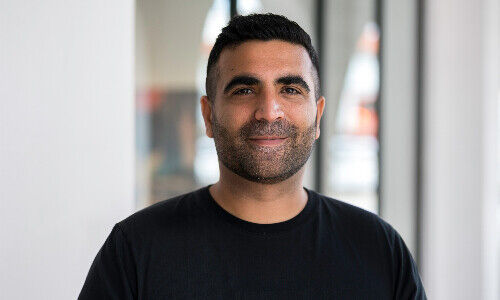
The global race for innovation has entered a new phase. It is no longer driven primarily by countries – or even regions – but by cities, and by how well they are designed to support the people building the next generation of companies, writes Nirbhay Handa in an opinion piece for finews.asia.
That is the central finding of the Startup Friendly Cities Index 2026, a new global ranking produced by Multipolitan, a global migration platform that aims to simplify exploring, living, and working across borders.
The index assesses how effectively cities facilitate the establishment, growth, and operation of companies across borders, employing a two-stage methodology that filters for venture-active countries and then scores cities across five key pillars: capital access, governance efficiency, digital readiness, human capital, and livability.
What the data reveals is a structural split - the world’s leading startup hubs are separating into two distinct models: legacy titans and builder cities.
Established Hubs Dominate Key Metrics
At the top of the Index sit familiar names: San Francisco ranks first globally, followed by Zurich, with New York City and Paris also in the top ten.
These cities benefit from decades of accumulated advantage. Deep venture capital markets, dense talent pools, elite universities, and global brand recognition continue to attract founders at scale. San Francisco alone hosts close to 200 unicorns, a level of venture density no other city currently matches.
These strengths, however, are largely historical. They are powerful, yet slow-moving. Many of the metrics that keep legacy cities at the top, such as unicorn counts, capital concentration, and institutional prestige, reflect past performance more than future readiness.
The Index shows that while legacy hubs remain magnets for capital, they are increasingly constrained by friction: slower incorporation, complex regulation, high operating costs, and immigration systems that struggle to keep pace with globally mobile founders.
Builder Cities Compete on Speed and Experience
In contrast to legacy titans, a second category of cities is rising quickly. These are the builder cities, led by Dubai and Singapore, ranked third and fourth globally.
Builder cities do not yet match the legacy titans in venture depth. What they offer instead is operational advantage. They are designed around speed, clarity, and founder experience.
As the Index analysis makes clear, these cities behave less like bureaucracies and more like platforms, primarily due to fast incorporation, well-integrated digital infrastructure, where banking, licensing, and visas are designed to work together rather than in sequence.
Founders Are The New Customers
Cities are becoming products, and founders are the new customers. Cities that treat founders like customers will always outperform cities that treat them like applicants.
Dubai exemplifies this model, with policies such as the Dubai Unified License that allow entrepreneurs to establish companies and open bank accounts in a fraction of the time required in many legacy hubs. Long-term residency options and rapid visa renewals for foreign talent further reduce friction, making founder mobility a core competitive advantage rather than an afterthought.
Singapore’s Real Advantage
Singapore takes a different approach, but the outcome is similar. Its strength lies in predictability, transparent regulatory processes, and reliable timelines. Its digital systems, from payments to identity verification, are among the most advanced globally.
Singapore has quietly become the operating system for ambitious founders. You don’t just come here for capital; you come for clarity. The rules are predictable, the infrastructure works, and from one city, you can plug into Asia, the Middle East, and the West. Singapore’s real advantage is that it lets entrepreneurs focus on building.
Why the Gap Is Widening
The Index suggests this split is not cyclical, but structural. Founder priorities are shifting. While capital remains important, it is no longer sufficient on its own. Operational access, cross-border mobility, and governance quality now weigh just as heavily in location decisions.
Legacy cities can adapt, but adaptation is difficult precisely because their systems are mature, layered, and politically constrained. Builder cities, by contrast, are still actively designing their institutional frameworks with founders in mind.
Summing up the Index’s findings: The data confirms what founders already feel. When regulatory speed, digital maturity, and quality of life align, teams move faster and stay longer. That combination is increasingly decisive.
The Future of the Startup Map

Multipolitan's latest publication (Image: handout)
What the Startup Friendly Cities Index 2026 ultimately shows is that the next decade of innovation will be shaped by cities that reduce friction, prioritize execution, and recognize founders as a strategic constituency.
The global startup map is no longer flat – it is bifurcating, and the cities built for builders are closing the gap.
Nirbhay Handa is widely regarded as a leading global voice on cross-border living. Before founding Multipolitan, he led growth across 40 offices at Henley & Partners as Group Head of Business Development and Asia Head of Private Clients.