EFG: US Exceptionalism Has Passed Its Peak
The era of Donald Trump has led to a fundamental tectonic shift in investor thinking. This is the key message of a white paper by an economist and a Swiss equities specialist at EFG. In contrast, Switzerland and its companies are seen as well positioned in the competitive landscape.
«The dominance of the United States as an investment destination is increasingly being questioned,» said EFG Senior Economist and Strategist Gian Luigi Mandruzzato at the presentation of the white paper in Zurich. «In addition, the weak dollar and high levels of debt have triggered a de-dollarization of the global economy.»
«One can observe that the dollar is being used less frequently within the global economy. We are seeing a trend toward a polycentric economic order, which makes sense in this context,» Mandruzzato added. «The dollar remains the dominant global currency, but its weight is declining.»
There are signs that «US exceptionalism» has passed its peak. The paper by the Swiss private bank points to a gradual shift toward active reallocation.
The world is currently facing numerous challenges—from heightened geopolitical tensions and fragile supply chains to rising debt and increasingly unpredictable leadership. It is therefore hardly surprising that this uncertain environment is prompting many investors to reconsider their global capital allocation and seek «safe havens.»
Preference for Markets Outside the US
In recent months, investors have favored markets outside the United States. Uncertainty surrounding US economic and trade policy is seen at a historic high.
Switzerland currently holds an outstanding position as an investment destination. According to the World Bank Governance Indicator, it is considered more stable than the United States, Germany, the United Kingdom, or China, the economist emphasized. In particular, the strength of institutions and the rule of law are rated very highly. Switzerland is also exceptional in terms of financial stability, as measured by government debt relative to GDP.
«We expect Switzerland to maintain its strong position in the coming years,» said the chief economist. He cited factors such as rising debt levels, for example in Germany due to investment programs, as well as increasing defense spending in many NATO countries. Debt in the United States is also expected to continue rising.

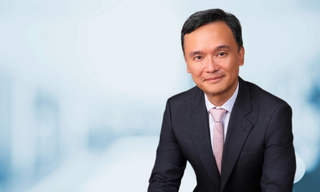
Gian Luigi Mandruzzato and Damian Burkhardt (Images: EFG)
Switzerland’s Competitive Advantages
Another advantage in the current Gulf crisis is Switzerland’s comparatively low dependence on fossil energy. Its share of total energy consumption stands at around 40 percent, compared with 70 percent in the EU and 80 percent in the United States.
This, together with low inflation, supports Switzerland’s strong competitive position and largely offsets the strength of the Swiss franc.
Strong Franc Drives Innovation
«The Swiss franc has been one of the strongest currencies in the world in recent years,» said Damian Burkhardt, Head of Swiss Equities at EFG. «This is essentially a competitive disadvantage, as it makes Swiss goods more expensive on the global market.» However, it has also forced companies to innovate. «Switzerland has topped global innovation rankings for years. Another positive factor is the high availability of talent,» the equities specialist noted.
Intellectual Property as a Key Driver
«Overall, one can observe globally that the strength of economies is shifting toward intangibles—meaning know-how, patents, and intellectual property. These underlying processes are the key drivers of value creation.»
Swiss equities offer investors access to high-quality and highly innovative companies. The innovative nature of many Swiss firms acts as a hidden performance driver, contributing to sustainable pricing power and value creation.