Sygnum Co-Founder: «The Long-Term Trajectory of Digital Assets is Intact»
U.S. regulatory clarity is now driving institutional crypto adoption in Asia after years of hesitation. This is also fueling strong momentum among wealthy investors, with double-digit allocations becoming increasingly common. That is according to Gerald Goh, co-founder of Sygnum.
Born out of parallel ambition in Singapore and Switzerland, Sygnum was designed from the outset as a regulated digital asset bank serving as a bridge between Europe and Asia. As co-founder and CEO of Sygnum Asia-Pacific, Gerald Goh has helped shape this transcontinental architecture since 2017.
Even as crypto markets are testing investor conviction, he reports strong demand: Sygnum’s latest survey of Asian HNWIs suggests that digital assets have entered the mainstream among wealthy investors in the region.
Mr. Goh, where did the idea for Sygnum actually originate?
It happened in Singapore in 2017 around the Singapore Fintech Festival. My three other co-founders — Luka Müller, Manuel Krieger and Mathias Imbach — and I were drawn together by a common vision: to empower everyone everywhere to own digital assets with complete trust.
And from the outset, was this meant to be a Singapore venture — or a Swiss one?
It was clear to us that between Singapore and Switzerland, both forward-looking and innovative global financial hubs, we would find the regulatory appetite to bring digital assets into the financial services sector. The one thing which we didn’t know back in 2018 was which regulator would be the first across the line.
So you effectively incorporated simultaneously in both jurisdictions.
Yes. In retrospect, it was absolutely the right idea to engage with both sets of regulators from the outset. Consequently, Asia-Pacific has always been embedded in Sygnum’s DNA from the very beginning.
«The one thing which we didn’t know back in 2018 was which regulator would be the first across the line.»
What was the commercial logic behind this dual structure?
We’ve always considered Singapore and Switzerland to be trusted and leading financial hubs in their respective regions. From these two bases, we would address Europe via Switzerland and Asia-Pacific via Singapore. FINMA and MAS were amongst the earliest regulators that understood the transformative power of blockchain. It was a marriage of best-of-both-worlds.
Looking from the outside, Sygnum Asia appears slightly more B2C-oriented than Sygnum in Switzerland, which is more B2B-focused.
In Singapore, we have both B2C and B2B channels. But it is still tilted more toward the B2C story at this stage. We have many more direct clients than banking partners. In Switzerland, by contrast, we work with more than 20 Swiss banks and are the market leader in B2B services.
Why has institutional adoption of crypto been slower in Singapore?
While we’ve engaged local banks and also external asset managers (EAMs) for years, the momentum to launch regulated digital-asset services has historically been a bit more muted than in some other jurisdictions as these regulated intermediaries approached this space with greater skepticism and caution.
«Regulatory clarity coming out of the United States has been decisive.»
What held them back?
There are numerous underlying reasons though one that was frequently highlighted was the regulatory uncertainty under the previous U.S. administration. That was certainly holding a lot of B2B partners in Singapore back from moving more aggressively addressing the digital asset opportunity.
But this is changing?
Yes. Regulatory clarity coming out of the United States has been decisive. With the policies enacted in 2025 — including the Genius Act, pro-crypto appointments and the potential passage of the Clarity Act — stakeholders are increasingly persuaded that the asset class is here to stay. The biggest concern, the U.S. regulatory nexus, has largely gone away. Banks and EAMs can now invest with more confidence in offering digital assets to clients.
Let’s talk about your client base in Asia. Who are you serving?
As a group, we don’t serve the retail market directly. Our direct clients are high-net-worth individuals, family offices, institutional investors and corporates. On the B2B or B2B2C side, we work with multifamily offices, EAMs, banks and other regulated financial institutions.
«About 75 percent of our client base in Singapore are Singapore-based families or institutions.»
So retail is excluded entirely?
We don’t serve retail directly, but via banking partners. We expect the B2B offering in Asia to scale over time and are in advanced discussions with several large domestic banks in Southeast Asia and North Asia.
Geographically, are you mainly focused on Singapore?
We can serve clients across Asia, provided we do so within the applicable cross-border regulatory framework. Singapore functions as our regional hub, similar to how other Swiss private banks operate here. About 75 percent of our client base in Singapore are Singapore-based families or institutions. The remaining 25 percent come primarily from Malaysia, Indonesia and Hong Kong.
Beyond Singapore, which jurisdictions are strategically relevant?
Asia is very diverse. Singapore benefits from having a mature regulatory framework for digital assets. But you now see major economies like Hong Kong, Japan and South Korea rolling out or planning to advance crypto regulations around custody, trading and ETFs. In other parts of Asia, emerging economies like Vietnam and Bhutan are also introducing their own frameworks. So, while regulatory development across Asia is uneven, it is certainly accelerating.
«The significant majority of respondents already had some crypto allocation.»
Your latest Asian HNWI survey, also covered by finews.asia, shows that non-adopters of crypto are now in the minority. Has digital assets become mainstream in private wealth?
It was the most definitive outcome we’ve had in four years of conducting this survey. For the first time, non-adopters were clearly in the minority of the segment studied. The significant majority of respondents already had some crypto allocation. We expected this at some point, but the pace of adoption was quicker than we had projected.
The report shows typical allocations in the 10 to 20 percent range.
Indeed. Directionally, the trend towards higher adoption and allocation has been steady year after year. What also surprised us was that respondents who already had crypto either intended to maintain or increase their allocation. Very few indicated that they planned to reduce exposure.
Could this reflect a selection bias?
Given the results I think it is a fair question. This year we had over 200 confirmed Asian HNWI respondents and worked with an independent survey administrator. I don’t think it is possible to eliminate all bias, but in our view whether the number is 10 or 20 percent is far less important than the consistent upward trend across time. I think it is undeniable that allocations have increased and are likely to go higher.
«Many respondents saw Bitcoin as a store of value and a hedge against currency debasement.»
Another striking finding: custody and security rank above return expectations.
Custody, safety of assets and counterparty risk are increasingly top of mind. Investors have been burnt by FTX and other exchange hacks. As the market transitions from early adopters to more conventional investors, working with regulated counterparties becomes crucial.
A majority say holding cash over five years is riskier than holding Bitcoin. Why?
When the survey was conducted, the fiat debasement theme was strong. Many respondents saw Bitcoin as a store of value and a hedge against currency debasement.
Yet markets are currently in a difficult cycle. How do you reconcile that?
The jury is still out on whether Bitcoin fully has those characteristics. But historically, investors who deployed capital into the asset class consistently over time have done well. As veterans of the space and pioneers in regulated digital assets, our conviction gets tested from time to time, but we continue to maintain that adoption is still at an early stage. The application of distributed ledger technology — especially tokenization of real-world assets — will be a multi-decade trend. Volatility will remain. But the long-term trajectory of digital assets remains intact.
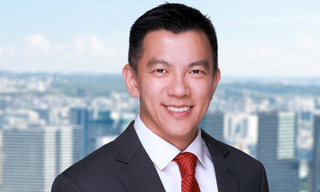
Gerald Goh is Co-Founder of Sygnum as well as CEO of Sygnum APAC.