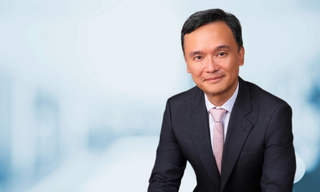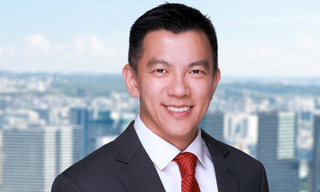

Ng Chee Meng: «Singapore’s Future Relies on Three Pillars»
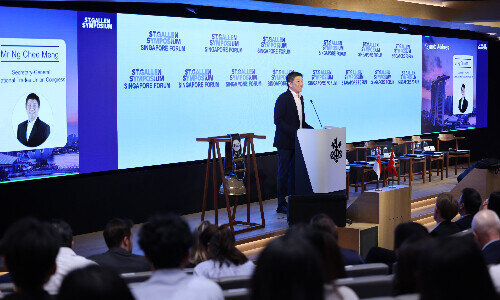
Speaking at the St Gallen Symposium Singapore Forum on Thursday, Ng Chee Meng set out a framework for navigating what he called a «disrupted age». For business leaders and investors, his message distilled into a clear conclusion: sustainable growth now rests on three interdependent pillars – security, technology-led economic renewal, and a just transition for workers.
Ng Chee Meng’s analysis carries particular weight because it is shaped by an unusually broad leadership trajectory. Before politics and union leadership, he served nearly three decades in the Singapore Armed Forces (SAF), including as Chief of Air Force and Chief of Defence Force, rising to the rank of lieutenant-general.
In 2015, Ng transitioned from uniform to public office, joining the governing People’s Action Party (PAP) and serving as Member of Parliament and in Cabinet roles, including Minister for Education and Minister in the Prime Minister’s Office.
He was appointed Secretary-General of the National Trades Union Congress (NTUC) in 2018 and has led Singapore’s main labour movement since. The combination of defence, economic policy, and labour leadership highlights his integrated view of national resilience.
Pillar 1: Strategic Security
In his keynote at the St Gallen Symposium Singapore Forum, Ng began with geopolitics, describing a world where the post-World War Two international order has shifted from relative stability to fragmentation.
For Singapore, this is not an abstract concern. Its security and economic success were built on open trade routes, international rule of law, and a stable balance of power – conditions that can no longer be assumed.
As a small, open economy and a price-taker in global markets, Singapore cannot dictate outcomes. Yet Ng argued that agency still matters. By strengthening multilateral institutions, deepening ASEAN integration, and investing steadily in defence capabilities, Singapore seeks to preserve strategic relevance and safeguard the conditions necessary for commerce and capital formation.
For financially savvy audiences, the implication is clear: in a fractured global environment, security policy has become inseparable from economic performance and investment confidence.
Pillar 2: Technology-Led Renewal
The second pillar is economic adaptation driven by technology, particularly artificial intelligence. Ng characterised AI not as a frontier novelty but as a general-purpose technology with economy-wide impact, comparable to electricity or computing in earlier industrial eras.
The upside is significant. Automation, robotics, and AI can mitigate labour shortages, lift productivity, and enable new business models – critical advantages for an ageing, labour-scarce economy.
Ng pointed to Singapore’s recent 4.8 percent growth as evidence that adaptation remains possible even amid global volatility.
At the same time, the disruption is broader than in previous cycles. AI will affect not only blue-collar workers but also white-collar professions such as finance, law and healthcare.
For firms, this elevates workforce redesign, skills investment, and technology adoption from operational considerations to board-level strategic priorities.
Pillar 3: Just Transition
The third pillar, and the one Ng emphasized most strongly from his labour perspective, is a just transition. History shows that industrial revolutions generate substantial wealth, but often with uneven distribution and painful interim dislocation. Ng warned that if even 10 to 20 percent of society is left behind, social resistance can derail technological progress and undermine growth.
A just transition is therefore not a social add-on but an economic necessity. Ng highlighted policy tools such as the Progressive Wage Model, enhanced protections for platform workers, extended re-employment ages for senior workers, and large-scale skills upgrading through SkillsFuture.
These measures are designed to align productivity gains with wage growth, preserving social cohesion and domestic demand.
From an investor’s standpoint, such frameworks help stabilise the operating environment by reducing political and social volatility – factors that markets frequently underestimate until they crystallise into risk.
Why the Pillars Must Move Together
Ng stressed that none of the pillars can stand alone. Security without economic renewal leads to stagnation. Technology adoption without social inclusion risks backlash and instability. Social policies without productivity growth are fiscally unsustainable.
Singapore’s response to disruption, as outlined in his speech, is deliberately integrated. Strategic security preserves economic space, technology drives competitiveness, and a just transition ensures that transformation remains socially and politically viable.
Investment Takeaway
In the disrupted age, sustainable value creation will accrue to economies that manage complexity rather than deny it.
Singapore’s three-pillar framework offers a case study in how a small, open economy can position itself for resilience – not by choosing between security, growth or fairness, but by recognising that each reinforces the others.
In Ng Chee Meng’s framing, the future belongs not to those who fear disruption, but to those who structure it intelligently.