Maybank Launches Strategy, Targets 13-14 Percent ROE
Malaysia-based Maybank has launched a five-year strategy with the target of achieving a return on equity of 13 to 14 percent.
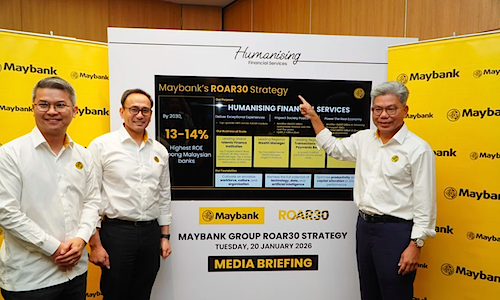
Maybank has unveiled its five-year strategy till 2030 entitled «ROAR30», according to a statement. In terms of financial targets, the Malaysian bank aims to deliver return on equity (ROE) of 13-14 percent by 2030, net interest margin of over 2.05 percent, cost-to-income ratio of 47 percent or lower and a CASA (current account and savings account) ratio of more than 41 percent.
According to Maybank president and group CEO Dato’ Sri Khairussaleh Ramli, the bank’s home markets in Malaysia, Indonesia and Singapore will be key drivers of growth and profitability.
«Beyond our home markets, we will connect our regional footprint via a coherent network strategy to support our clients wherever they go,» he said. «In strengthening our foundation, we endeavor to future-proof the organisation, shape mobile workforce with a transformative mindset and culture, encourage continuous learning, implement technology modernisation, as well as optimize productivity and financial performance.»
Three Strategic Pillars
In order to achieve its goal, Maybank highlighted three strategic pillars.
First is purposing its services based on a value-based offering by delivering exceptional experiences to customers; impacting society positively; and powering the real economy.
Second is growing four businesses at scale: global Islamic finance; regional wealth management; regional transactions and payments bank; and regional corporate and investment bank.
Third, it will build a sustainable bank by focusing on three core areas: cultivating an enviable workforce, culture, and organization; harnessing the full potential of technology, data, and artificial intelligence; and optimizing productivity and capital allocation to drive performance.
«Ultimately, Maybank via ROAR30 aims to ensure meaningful impact and sustainable values creation for all stakeholders, including our customers, communities and the economies we serve,» Khairussaleh added.