
Singapore Opens the Window to Risk
Singapore is formally bidding farewell to its long-held zero-risk reflex as a financial centre. In a clear signal to markets, policymakers, and global investors, Minister for National Development Chee Hong Tat declared that absolute safety is no longer compatible with innovation, growth, and relevance.
Speaking at a client event hosted by Bank of Singapore last Thursday in Singapore’s iconic Marina Bay Sands Expo & Convention Centre, attended by almost 900 clients, Chee Hong Tat framed the shift as both necessary and deliberate – a watershed moment for the city-state’s financial strategy. His core message was stark: a zero-risk approach may preserve stability, but it also suffocates progress.
Singapore, he stressed, has built its success on trust, credibility, and institutional strength – yet those qualities alone are no longer sufficient. The global economy is changing fast, and standing still is not an option.
A small, nimble country like Singapore must adapt quickly or risk being overtaken by more experimental financial hubs, he said.
Trust First, But Not at the Expense of Innovation
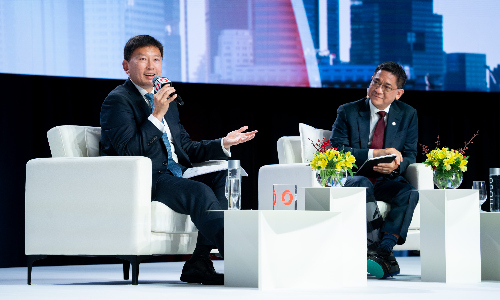
Minister Chee Hong Tat and Jason Moo, CEO of Bank of Singapore (Image: BoS)
The minister was unequivocal that Singapore’s trusted brand remains non-negotiable. Investors choose the Republic precisely because it is safe, stable and predictable. However, Chee rejected the illusion that any jurisdiction can eliminate risk entirely.
Some rogue actors will inevitably emerge; the task of regulators is to keep their numbers small and deal with them decisively. This is what he described as a risk-proportional approach – one that allows calculated experimentation without undermining confidence.
Family Offices and the End of the Illusion of Perfect Control
Family offices featured prominently in the discussion. Singapore, Chee said, must accept that tighter controls are necessary, but regulation should never choke off development. Citing a Chinese proverb, he noted that opening windows to let in fresh air and sunlight will also allow some flies to enter – the goal is to ensure there are not too many.
The implication was clear: Singapore cannot aspire to be both perfectly sealed and globally competitive, particularly as it faces rising competition from emerging financial centres such as Dubai and Abu Dhabi, alongside its ongoing rivalry with Hong Kong.
Digital Assets and Regulatory Restraint
On digital finance, Chee urged balance rather than bravado. Stablecoins, he said, are not all the same and should not be pursued simply out of fear of missing out. Singapore must identify where genuine economic value lies, apply safeguards carefully, and move only where it makes strategic sense.
As deputy chairman of the Monetary Authority of Singapore (MAS), he underlined that regulators are monitoring developments closely but feel no pressure to chase trends at the expense of prudence.
ASEAN as the Next Growth Multiplier
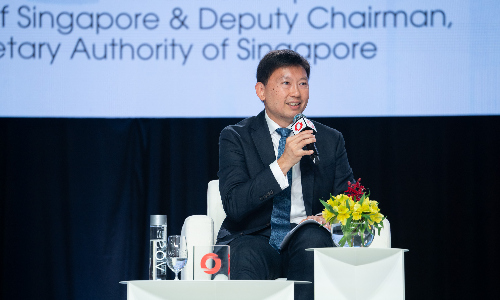
Chee Hong Tat, Minister for National Development and Deputy Chairman of the MAS (Image: BoS)
Chee also placed Singapore’s financial evolution in a regional context. ASEAN, already the world’s fifth-largest economy and in 20230 to be the fourth due to its massive young population, remains under-integrated.
Initiatives such as the Johor-Singapore Special Economic Zone (JS-SEZ) and a potential ASEAN power grid could unlock fresh investment flows rather than merely reshuffling existing capital.
Integration, not uniformity, is the objective – creating platforms that allow less-developed economies to join when ready.
From Safe Harbour to Vibrant Financial Engine
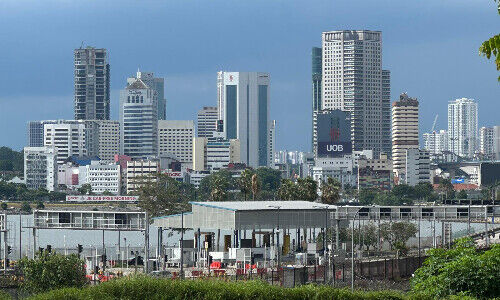
Johor Bahru, Malaysia (Image: finews.asia)
The overarching message was that Singapore must be more than a place where money is parked. Safety and trust are table stakes; vibrancy is the differentiator.
To remain relevant, the financial centre must attract entrepreneurs, talent, and capital willing to build, not just preserve wealth. Chee’s preferred framing was telling: not only «Made in Singapore», but also «Made by Singapore» and «Made with Singapore».
Strategic Pivot With Global Implications
By openly rejecting a zero-risk mindset, Singapore is redefining its financial identity. The shift does not signal recklessness, but maturity – an acknowledgement that controlled risk is the price of leadership in a competitive global system.
For investors, the message is equally clear: Singapore intends to remain trusted, but it also intends to remain relevant – and innovative.