Banks Race to Set Rules for AI Payments
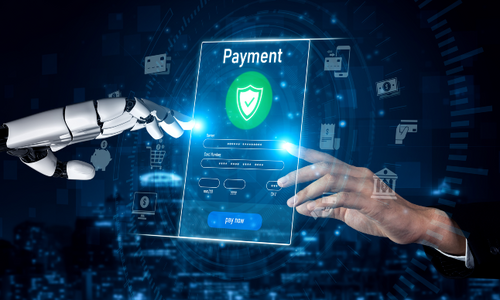
Artificial intelligence is beginning to execute payments autonomously across Asia, but one crucial question remains unresolved: who is liable when an AI agent makes the wrong decision? Banks and payment providers are now moving to establish common rules before the technology reaches the mainstream.
The Emerging Payments Association Asia (EPAA) and HSBC have launched the region’s first industry working group dedicated to AI and agentic payments, bringing together banks, payment networks, fintech firms and technology companies to develop common standards for the next generation of digital commerce.
The initiative comes as AI agents are increasingly executing transactions on behalf of businesses and consumers. Earlier this year, HSBC and Mastercard completed end-to-end B2B agentic commerce pilots for two Singapore-based clients, while Alipay processed more than 120 million autonomous AI payment transactions in a single week. Mastercard also completed its first live consumer-authenticated agentic payment in Asia-Pacific.
Liability Gap
Despite the rapid adoption of agentic AI, the financial industry lacks a common framework governing liability, identity verification and fraud prevention.
There is currently no agreed standard across Asia-Pacific defining who is responsible if an AI agent exceeds its authority, how autonomous agents should be authenticated across borders or how fraud detection systems can distinguish legitimate machine-generated payments from fraudulent activity.
According to the EPAA, these issues are becoming increasingly urgent as AI systems move from assisting users to independently initiating transactions.
Industry Push
The new working group aims to develop practical standards covering agent identity, authentication and authorisation, as well as liability frameworks for failed or disputed transactions. Participants will also work on commercial models and engage with regulators across ASEAN and APEC to help shape future policy. Formal recommendations are expected to be presented in late 2027.
«AI agents are transacting across Asia Pacific right now, at scale, at machine speed, and without the regulatory architecture to protect businesses and consumers from real risks around liability, identity and fraud,» said Camilla Bullock, Chief Executive of the Emerging Payments Association Asia.
Nicholas Soo, Managing Director and Asia Head of Payment Products at HSBC, said the bank’s recent pilot projects had demonstrated that agentic commerce could be executed with «control, transparency, and risk management from the start». He added that collaboration across the industry would be essential to build the trust required for wider adoption.
With Asia-Pacific expected to become the world’s fastest-growing market for agentic commerce over the coming years, the debate is rapidly shifting from whether AI will make payments to how banks, regulators and technology providers can ensure those payments remain secure and accountable.