AI to Reshape Investment Advice
AI is rapidly reshaping the investment industry, and advisers who fail to adapt risk being left behind. At a Singapore family-office summit, industry leaders warned that investors must learn to work alongside AI while keeping human judgment and accountability at the heart of financial advice.
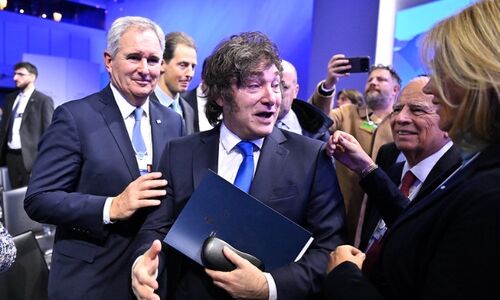
Investment advisers who fail to adapt to artificial intelligence risk being left behind as AI reshapes investment decision-making, Bridgewater Associates founder Ray Dalio told a gathering of more than 400 family-office and wealth-management professionals in Singapore.
“You are either going to be on the crest of this AI wave, or you’re going to drown under it,” Dalio said at the Wealth Management Institute’s Global-Asia Family Office Summit on Tuesday.
Speaking during a session on investing in the age of AI, Dalio said the technology could support almost every stage of the investment process, from gathering information and establishing decision criteria to back-testing strategies, constructing portfolios and executing trades.
Investors Need a Clear Investment Framework
But he cautioned against treating AI as an unquestioned source of answers. Investors still need a clear investment framework and must understand the cause-and-effect relationships behind their decisions, he said.
Dalio advocated developing a personalised approach to AI that reflects an investor’s own values, choices and thinking. He described the future as “you and your AI partner”, with the technology helping investors continually challenge, test and refine their ideas.
The comments came as WMI announced plans to train 21,000 wealth and asset-management professionals in AI over the next three years. The programmes are designed to provide practical, role-specific training, with safe and responsible use of AI embedded in the curriculum.
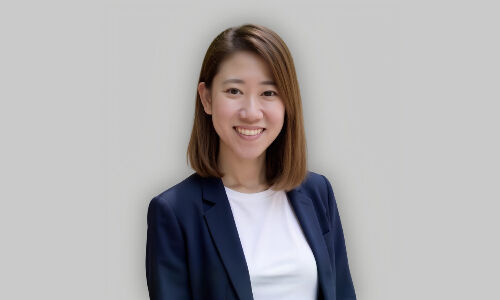
WMI chief executive Foo Mee Har (picture below) said AI was already changing how investment professionals work, including by helping them synthesise large volumes of research, identify portfolio vulnerabilities and strengthen risk analysis.
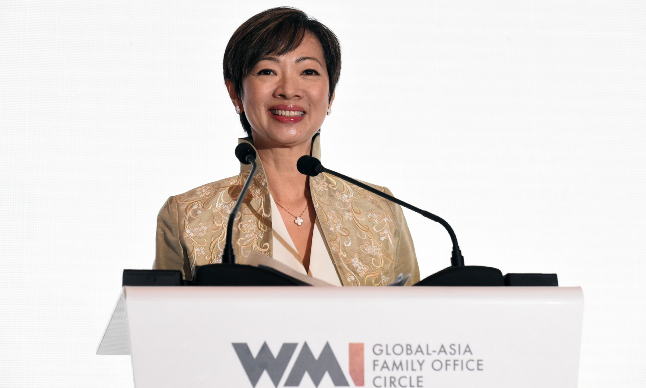
(Image: Provided)
But greater use of AI also brings new responsibilities, she said, including protecting confidential client information, identifying bias and unreliable outputs, and maintaining appropriate human oversight.
“AI can generate an answer. Advisers remain accountable for the advice,” Foo said.
AI could give advisers more time with clients
As AI takes on more analytical and routine tasks, Foo said the value of human relationships could increase rather than diminish.
Advisers who understand how to use AI effectively could have more time to prepare, develop deeper insights and focus on understanding family concerns, building trust and strengthening relationships, she said.
WMI's training initiative forms part of the broader financial-sector effort under the IBF AI Workforce Co-Lab, which was recently launched by Deputy Prime Minister Gan Kim Yong to prepare workers for changing roles through training and job redesign.
The institute said its objective is to help financial professionals translate AI capabilities into higher productivity, stronger advice and deeper client relationships.
Asian family offices see advisers playing a smaller role
The push to strengthen advisers’ capabilities comes as WMI research points to an opportunity for advisers to play a larger role in family-office decision-making.
A new WMI study, Stewardship by Design: Preparing Asia’s Next Generation for Leadership and Impact, found that only 32% of family offices in its primarily Asian sample regarded advisers as a source of guidance when making strategic decisions about wealth and legacy.
That was about one-fifth lower than the proportion in the international sample.
The study, conducted with academics from Harvard Business School and the University of Chicago Booth School of Business, drew on responses from about 150 family offices, primarily in Asia, and compared them with family offices worldwide, most of which were based in the Americas.
Foo said the findings suggested advisers could earn a greater role in families’ strategic decision-making by moving beyond individual financial products and developing a broader understanding of investments, governance, succession and family purpose.
“This points to a significant opportunity for advisers to earn a greater role in families’ decision-making,” she said.
WMI Targets 1,200 Private Bankers for Philanthropy Training
WMI is also expanding its partnership with the Private Banking Industry Group, with a target of 1,200 private-bankers’ enrolments over the next three years in programmes covering philanthropy, legacy and purpose.
The institute said interest in philanthropy training is growing as families look for ways to translate their values into action and involve younger generations in decision-making.
The second day of the fifth WMI Global-Asia Family Office Summit, held under the theme “Legacy in Action: Capital for the New Horizon”, focused on next-generation investing, family-office governance, philanthropy, long-term capital and the impact of emerging technologies on investment decisions.
More than 630 participants attended the summit over its two days, according to WMI.
The institute, established in 2003 by GIC and Temasek, provides education and training for wealth and asset-management professionals and says it has more than 20,000 annual enrolments across more than 160 programmes.