OCBC Opens Platinum and Palladium Investing to Retail Clients
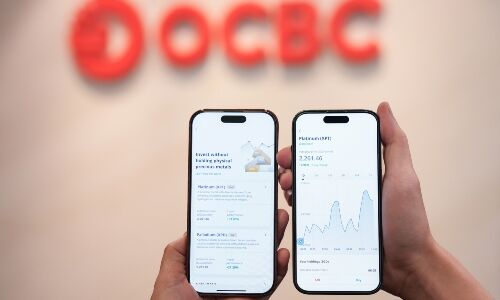
Singapore’s OCBC is expanding its digital precious-metals offering beyond gold and silver. Retail investors can now gain exposure to platinum and palladium with relatively small amounts – another step in the bank’s push to broaden access to investment products through its mobile platform.
OCBC is widening its precious-metals proposition for retail investors, adding platinum and palladium bullion to the range of assets available through its mobile app.
The Singapore-based bank said on Tuesday that customers can now invest digitally in the two metals from as little as 0.01 ounces. Based on prices as of August 7, that translates into an entry point of around 23 Singapore dollar for platinum and 18 Singapore dollar for palladium.
The move extends an offering that already includes gold and silver, which OCBC has made available to retail customers through its app since October 2021.
Moving Beyond Gold and Silver
While platinum and palladium are established global commodities, access through Singapore banks has traditionally been more limited and often targeted at affluent investors. By introducing fractional investments, OCBC is seeking to bring the two metals to a considerably broader customer base.
The expansion also reflects a wider trend among Asian banks to lower investment thresholds and shift more wealth-management capabilities onto digital platforms.
For OCBC, precious metals appear to be attracting growing interest. The number of customers investing in gold and silver through its platform increased 2.5-fold year-on-year in 2025, according to the bank. Demand has remained resilient in 2026 despite heightened volatility and sharp corrections in both metals.
A Different Investment Story
Platinum and palladium can play a different role in portfolios than gold. Whereas demand for gold is heavily influenced by its status as a store of value and by central-bank purchases, platinum and palladium are closely tied to industrial activity.
Platinum is used in automotive manufacturing, industrial processes and hydrogen fuel-cell technologies. Palladium, meanwhile, remains an important component in vehicle emissions-control systems.
Their prices are therefore influenced by developments in areas ranging from automobile production to clean-energy technologies. At the same time, global production is concentrated in relatively few countries, adding a supply-side dimension to their investment case.
That combination can result in price movements that diverge significantly from those of gold and silver – potentially offering diversification, but also exposing investors to greater volatility.
OCBC Sees Further Upside
OCBC Group Research expects both metals to rise further. Its analysts forecast platinum spot prices to exceed 2,000 dollar and palladium to surpass 1,500 dollar by the first half of 2027.
At the end of June 2026, platinum stood at 1,833 dollar and palladium at 1,389 dollar, according to figures provided by the bank.
OCBC is nevertheless cautioning investors against treating the two metals as straightforward alternatives to gold.
«It is nonetheless important to recognise that platinum and palladium are high-beta metals,» said Tan Siew Lee, Head of Group Wealth Management at OCBC.
Investors prepared to tolerate greater volatility, she added, could use the metals to gain exposure to themes «at the intersection of industrial activity, resource scarcity, and the evolving global energy transition.»
Digital Wealth Push
The launch fits into OCBC’s broader effort to make investment products accessible to a larger pool of customers through its digital channels.
Rather than positioning precious metals solely as a wealth-preservation tool for affluent clients, the bank is increasingly using fractional investing and low minimum thresholds to bring the asset class into its mass-retail proposition.
For OCBC, the addition of platinum and palladium therefore represents more than an extension of its metals menu. It is also another building block in the Singapore lender’s strategy of moving wealth management further into the digital mainstream.