Swiss Wealth Management: A Brand Put to the Global Test
International expansion confronts Swiss wealth managers with a delicate balancing act: How do you assert yourself between Swiss roots and local identity? finews checked in with Marcuard Heritage's outposts in Abu Dhabi and Singapore.
The international expansion of Swiss wealth managers into emerging and established financial hubs requires strategic skill and cultural adaptability. An established Swiss brand alone is not enough to succeed in highly competitive growth markets.
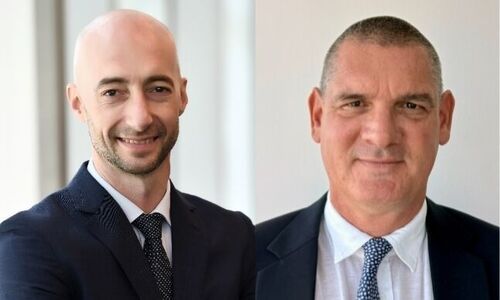
A conversation with Michael Kuenzi, head of the Marcuard Heritage office in Abu Dhabi, and his colleague in Singapore, Michel Keiser, about the balancing act between global appeal and local roots, changing client needs, and what «Swissness» means today.
Mr. Kuenzi and Mr. Keiser, Marcuard Heritage deliberately chose to establish a presence in the United Arab Emirates and in Asia. What were the strategic considerations behind these locations, and what goals are you pursuing there?
Michael Kuenzi, Abu Dhabi (AD): For Abu Dhabi, diversification is the key consideration. Anyone holding substantial wealth should use different financial centers. We are pursuing three primary goals here: managing client assets that are already in the UAE but have historically been serviced from other centers, building an attractive platform for our relationship managers (RMs) from other booking centers, and third, building a local client book with locally hired RMs. The first goal has largely been achieved; the other two are ongoing processes.
Michel Keiser, Singapore (SG): We have been on the ground in Singapore since 2008. Marcuard Heritage recognized Asia's immense growth potential early on, and we are building on those investments today. We are currently in the midst of a major transition: the traditional discretionary business model is being complemented by an active advisory approach, which remains dominant in Asia. Demand for active advice is far greater here than in Europe – on this point, local adaptation is decisive. Recently, we have also benefited from the demise of Credit Suisse, winning over local talent and their clients to the advantages of independent advice.
Can you quantify that success: How have assets under management developed at both locations, and since when have the offices been profitable?
Keiser: In Singapore, assets under management have been stable at around $500 million for several years and are now poised to grow markedly. The location has been profitable from the start.
Kuenzi: In the Emirates, we had something of a jump-start, as we have been booking client assets there for diversification purposes for ten years. We are currently in the lower three-digit million range and recently reached breakeven – on a monthly basis.
How is your brand perceived in each local market, and how much do you rely on «Swissness» in client acquisition?
Keiser: In Singapore, we are still partly seen as a kind of startup, something we want to change by consistently expanding our services. As for «Swissness»: in certain Asian countries, it has suffered badly since the Credit Suisse drama and the controversial AT1 write-downs. The Swiss brand as a haven of safety with a substantial trust bonus has been dented, which is reflected, for instance, in lower demand for booking options in Switzerland. For us in Singapore, «Swissness» is currently of secondary importance. What counts is solely the service delivered by the people in charge. It's a people's business. And, objectively speaking, banking services in Singapore and Hong Kong are in no way inferior to those in Switzerland.
«The Swiss brand as a haven of safety with a substantial trust bonus has been dented.»
Kuenzi: From my perspective, the Swiss brand still stands for many positive values in the UAE, and our Swiss roots therefore carry positive connotations per se. We are proud of them and happy to mention them. What matters, however, is that «Swissness» merely lays a kind of carpet. Our clients, our employees, and our network are highly international. Focusing too heavily on our Swiss origins would not do justice to this reality. Ultimately, client acquisition is first and foremost the RM's job. The strongest argument is the personal trust between RM and client, supported by our expertise and our network.
If not through Swiss origins alone – how do you anchor yourselves as a foreign player in such different cultures?
Kuenzi: I often look to Singapore, where a strong local identity and perception have already taken shape. For Abu Dhabi, that is a blueprint, which is why we are pushing above all the build-up of local know-how and a local network. In concrete terms, that means hiring employees and approaching clients of Arab descent, developing an affinity for and understanding of the country and region, and embedding ourselves in this culture – or in short: learn and understand. Building a network takes time above all. It is not just about knowing many people, but about establishing long-term, personal relationships of trust. You constantly have to ask yourself: How can I help the person across from me? That creates bonds.
Keiser: In an extremely competitive environment like Singapore, it would be difficult in the long run without local roots and integration. The art lies in bringing two cultures – Western and Eastern – closer together and bridging potential prejudices and divides. We have managed this well thanks to our long-standing presence, cultural integration, and a mix of local and foreign employees. I myself benefit from 18 years of experience in Singapore and a corresponding network. Cultural adaptability is imperative. An inflated self-assurance among Western expatriates is not well received everywhere. One has to acknowledge that Asia's financial industry has long since caught up in many areas.
Let's turn to your clients. What characterizes a typical client at your respective locations?
Kuenzi: It is still too early for a definitive characterization in Abu Dhabi. We are currently in a learning phase and don't want to generalize too quickly.
Keiser: There is no such thing as the one typical client. We focus mainly on Asian clients domiciled in Greater China. In general, expectations of bankers in Singapore and Hong Kong are high when it comes to advisory activity and service. High and ultra-high-net-worth clients often expect proactive advice – and not infrequently daily contact. If that isn't delivered, they quickly switch bankers or institutions. That puts considerable pressure on the industry.
«The market for experienced RMs is still thin, as private banking in the UAE is itself still very young.»
How intense is the competition compared to Switzerland?
Kuenzi: The market for independent wealth managers in the UAE is very large. The external asset management (EAM) industry, however, is still new to the local banks, which is why we often act as partners rather than competitors. Recruitment is trickier: the market for experienced RMs is still thin, as private banking in the UAE is itself still very young.
Keiser: The EAM industry in Asia is growing rapidly in terms of volume, technology, and regulation. Competition, particularly in Singapore and Hong Kong, is extremely fierce. The battle for «human assets» and attractive clients is part of the daily agenda. The banking scene in Singapore is very tightly knit – everyone knows everyone. As a foreign market participant without correspondingly deep local connections, it is nearly impossible to win good talent.
Finally: What can other locations learn from your experience, and where do you see the next «places to be» for an international wealth manager like Marcuard Heritage?
Kuenzi: One can learn from the speed of the build-up in Abu Dhabi. The financial regulator of the Abu Dhabi Global Market is extremely active, rolls out the red carpet for newcomers, and organizes top-tier networking events. As the next potential «place to be» for Marcuard Heritage, I clearly see Hong Kong.
Keiser: Singapore shows that the financial industry can enjoy high standing. The state lives off services and human capital, policy is aligned accordingly, and the industry's contribution is valued by the population. That, unfortunately, has been somewhat lost in Switzerland over the years. As for the next locations: given the geopolitical situation and high entry barriers in established hubs, I see potential in centers such as Bangkok or Kuala Lumpur.
Are there concrete plans at Marcuard Heritage regarding Hong Kong? If so, what is the time horizon?
Kuenzi: Hong Kong is a major international wealth management hub and has featured in our strategy discussions time and again for some ten years. At present, however, nothing concrete is planned.
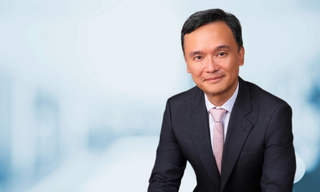
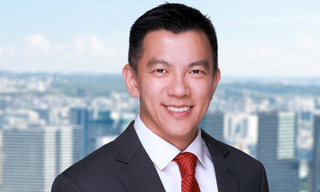
Michel Keiser has headed the Singapore office of Marcuard Heritage since 2024. He previously worked for Credit Suisse in Singapore, among other roles as head of international private banking and desk head for the Malaysia/Singapore market.
Michael Kuenzi has headed the Abu Dhabi office since 2024. He has held various leadership roles at Marcuard Heritage since 2013. Before that, he worked for Lombard Odier and UBS in London and Moscow.