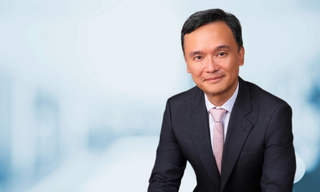
Martin Wong: Why Legacy Planning Must Be Values-Led
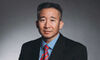
Grandtag Financial Consultancy’s Asia chief Martin Wong shares a commentary with finews.asia about not losing sight of the intangibles embedded within Asia’s intergenerational wealth transfer if legacies are to be upheld.
Wealth is often measured precisely – tracked across markets, statements, structures, and jurisdictions. Yet for Asia’s high net worth (HNW) families navigating one of the largest intergenerational wealth transfers in history, what matters most is not always what is most visible.
Capital can be protected, diversified, and efficiently transferred. But as wealth changes hands, something less tangible is often left to chance. Over time, families may find that continuity weakens, shared purpose drifts, and alignment across generations becomes harder to sustain – even as balance sheets remain intact or ironically grow.
When wealth moves forward but meaning does not, are legacies truly built to last?
Structures Alone Cannot Hold Legacies Together
Traditional Asian values – filial piety, collective responsibility, respect for elders, and commitment to community – have long provided the foundation for family cohesion. Yet modern life operates on a different rhythm, with real-time markets and algorithmic feeds encouraging reaction rather than reflection.
For wealthy families, this shift can be subtle but corrosive. Focus starts to drift from stewardship to short-term performance, and success becomes equated with returns rather than responsibility. Globalization intensifies this challenge, as dispersed heirs continue to bring home diverse world views, while multi-jurisdictional structures add layers of complexity and risk that can obscure the human element of wealth planning.
In this environment, even the most sophisticated legal architecture cannot, on its own, preserve what matters most. We have seen successful families struggle when younger generations are dispersed internationally; even with well-structured trusts, conflicts arise when values are unclear. True legacy requires a shared sense of purpose that can withstand distance and complexity. Families who understand this know that values are not inherited – they must be consciously articulated, actively reinforced, and deliberately passed on.
Turning Values into Continuity
The urgency of this task is reflected in how 60 percent of Asian families fear their wealth will not last beyond their children's generation, while less than one-third believe their children will uphold family traditions. These numbers point not to poor financial planning, but to something more elusive slipping away: the intangible compass that transforms wealth into legacy.
Values become durable only when they move from abstract ideals to lived practice. This requires deliberate action. It begins with intergenerational dialogue – substantive conversations about what success and responsibility mean, and what the family stands for beyond its portfolio. This creates shared understanding and aligns expectations before decisions must be made under pressure.
From dialogue comes codification. Forward-thinking families translate their values into family charters or purpose statements that serve as constitutions for decision-making. These guiding frameworks clarify principles and establish governance long before disputes arise. Finally, values must be practised through continuity rituals; mentoring relationships between generations, annual family retreats, or shared philanthropic initiatives that transform principles into habits and reinforce what it means to be part of a legacy.
In our work with HNW families in Asia, we embed these practices within a holistic approach to wealth and legacy planning, helping maintain alignment and continuity as wealth transitions across generations – not simply through structures, but through the cultivation of shared purpose that gives those structures meaning.
The Evolving Role of the Wealth Advisor
This shift has fundamentally changed what advisors must become. The modern wealth advisor's role extends far beyond technical expertise or portfolio construction. We are evolving into cultural interpreters – professionals who help families articulate the stories and values that define their identity.
This means facilitating the difficult conversations families often avoid and translating deeply held beliefs into governance frameworks that outlast individual voices. Especially for next-generation heirs, we have observed this to be transformative. Many inherit significant responsibility yet feel disconnected from the experiences that forged the family's success. By helping heirs internalize stewardship and purpose, advisors bridge this gap and facilitate not just wealth transfer but the transfer of identity itself.
For families with roots in Asia and reach across the globe, this cultural dimension is vital. Integrating tradition with global opportunity ensures that even as capital crosses borders and generations, the values guiding its use remain relevant and intact.
The True Measure of Legacy
In a world preoccupied with immediacy, where algorithms predict tomorrow and markets respond to headlines within seconds, the ability to look beyond the moment has become both rare and essential. Legacy is not a static inheritance but a living practice – one that requires families to adapt their expression while remaining faithful to their essence.
The families who invest as intentionally in their invisible wealth as they do in their financial capital will discover that the most enduring part of success cannot be bought, traded, or replicated. It must be lived, reaffirmed with each generation, and consciously chosen again and again, in the midst of our ever volatile, uncertain, changing and ambiguous world. This is the true measure of legacy: not what is preserved in perpetuity, but what is carried forward with purpose.
Martin Wong is the regional CEO of Grandtag Financial Consultancy (GFC), a financial advisory firm specializing in wealth, health, and legacy planning for high net worth individuals and families across Asia-Pacific. Since early 2022, he has been leading GFC's business growth in Asia, focusing on ASEAN and North Asia. Before that, he worked for Charles Monat Associates and Jardine Lloyd Thompson. Beyond his professional endeavors, he is an accomplished athlete. In his 50s, he won numerous medals at Masters Athletics pursuits.