Grandtag’s Wealth Management Outlook 2026
For Asia’s HNW and UHNW families, wealth has gone global – and managing it has never been more demanding. Assets, businesses, and family lives now span multiple jurisdictions, each with its own regulatory, cultural, and risk landscape. Heading into 2026, these pressures – alongside generational transition and a renewed sense of purpose – are transforming how families think about legacy, writes Grandtag’s regional CEO Martin Wong in an exclusive op-ed for finews.asia.
For many high-net-worth (HNW) and ultra-high-net-worth (UHNW) families, cross-border wealth has become the norm. Businesses may remain anchored in Asia, while assets, education, and family members are spread across Europe, North America, and beyond. This dispersion introduces layers of regulatory, tax, and succession complexity that cannot be addressed through fragmented or jurisdiction-specific solutions.
In 2026, effective wealth planning will demand globally coordinated structures that prioritise resilience and liquidity. Families increasingly seek approaches that allow them to adapt as regulations shift, markets evolve, and personal circumstances change.
Cross-border legacy planning is becoming less about technical optimisation and more about ensuring continuity, clarity, and confidence across generations.
New Generation at the Table
Next-generation perspectives are playing an increasingly influential role in shaping wealth and legacy decisions. Millennials and Gen Z heirs are engaging earlier in discussions around governance, diversification, and long-term planning, often with a broader view of what constitutes family wealth.
While founders have traditionally focused on businesses, property, and core assets, younger generations are increasingly considering a wider range of asset classes, including emerging ones such as digital assets.
As these assets become part of family balance sheets, they are also entering conversations around succession, liquidity, and stewardship. Addressing these differences through early, structured dialogue helps families integrate evolving forms of wealth into coherent and resilient legacy plans.
From Wealth Transfer to Meaningful Legacy
Legacy itself is being redefined. Families increasingly ask not only how wealth should be preserved, but what it should represent. Values-led legacy planning places greater emphasis on purpose, moving beyond purely asset-centric thinking.
The challenge lies in creating frameworks that preserve family unity while allowing values to evolve naturally across generations. When aligned effectively, legacy becomes a living expression of identity rather than a static inheritance.
Building Legacies That Endure
In 2026, the families that are best prepared will be those that move from intention to execution.
This means stress-testing existing structures against liquidity goals and cross-border realities, while also formalising how decisions are made as assets and responsibilities diversify across generations.
Families will also need clarity on what must remain constant and where flexibility is required. Those who act decisively will be better positioned to preserve continuity and strengthen their foundations for the years ahead.
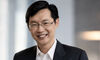
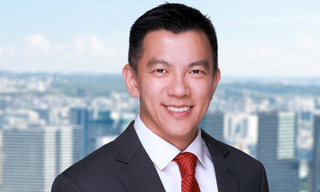
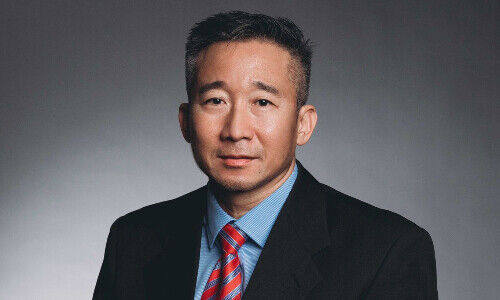
Martin Wong is the regional CEO of Grandtag Financial Consultancy (GFC), a financial advisory firm specializing in wealth, health, and legacy planning for high-net-worth individuals and families across Asia-Pacific. Since early 2022, he has been leading GFC's business growth in Asia, focusing on ASEAN and North Asia. Before that, he worked for Charles Monat Associates and Jardine Lloyd Thompson. Beyond his professional endeavors, he is an accomplished athlete. In his 50s, he won numerous medals at Masters Athletics pursuits.