Hong Kong Trails Singapore in New Global AI Cities Ranking
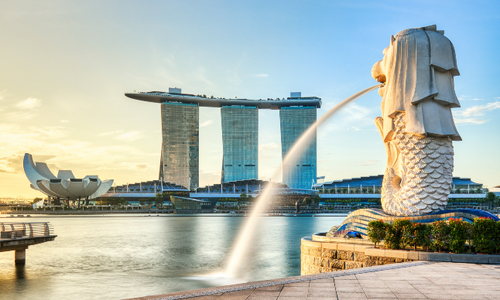
Singapore has cemented its position among the world’s leading AI-powered cities, while Hong Kong trails regional rivals in a new global ranking.
Hong Kong is losing ground to several Asian peers in the global race to build AI-enabled cities, according to a new study by Boston Consulting Group (BCG).
The consultancy’s inaugural Intelligent Cities Index 2026 assessed 61 major cities worldwide across five dimensions, including AI adoption, digital infrastructure, governance, innovation ecosystems and resident outcomes. London topped the ranking, followed by Dubai, New York, Washington and Amsterdam.
Among Asian financial centres, Singapore emerged as the regional leader, ranking 11th globally. Shanghai (8th), Beijing (9th), Seoul (10th) and Shenzhen (14th) also placed ahead of the city state.
Hong Kong, by contrast, ranked only 36th overall, placing it in BCG’s “Emerging” category rather than among the world’s more advanced intelligent cities.
AI Adoption Alone Is Not Enough
According to BCG, cities that integrate artificial intelligence into public services tend to deliver stronger economic opportunities and better outcomes for residents. However, the report argues that technology alone is insufficient.
Long-term success depends equally on so-called «soft enablers» such as talent, venture capital, startup ecosystems and effective public-private collaboration. The most advanced cities combine both digital infrastructure and strong innovation ecosystems.
The study also highlights a strong relationship between thriving startup ecosystems and economic opportunity, suggesting that cities capable of attracting entrepreneurs and investment are better positioned to translate AI capabilities into sustainable growth.
Singapore Outperforms Hong Kong
While Singapore ranked comfortably among the world’s accelerating intelligent cities, Hong Kong appears to lag in several areas of digital maturity.
BCG’s analysis indicates that cities throughout Asia show some of the world’s strongest enthusiasm for generative AI, particularly among younger populations. Yet enthusiasm alone does not guarantee leadership. Cities also require coordinated AI strategies, funding, governance and widespread deployment across public services to move into the highest maturity tier.
The findings are likely to reinforce the growing competition among Asia’s leading financial centres as governments increasingly view AI capabilities, digital infrastructure and innovation ecosystems as critical factors in attracting global capital, talent and technology companies.