Lombard Odier, the 8-Generation House
For 230 years, Lombard Odier has remained an independent family-owned partnership. Drawing on eight generations of experience, the Swiss private bank understands the importance of preserving values, wealth and legacy for future generations of entrepreneurs and families.
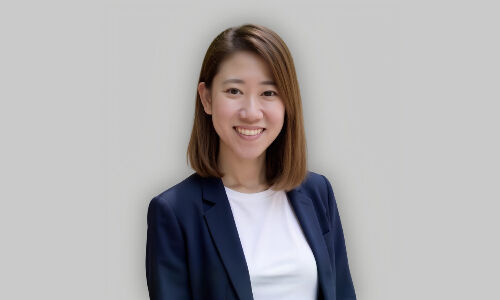
In this interview, Andrea Meierhofer, Southeast Asia Market Head, Private Clients at Lombard Odier, shares how the firm’s 8-generation heritage shape its approach to supporting Asian families through succession, governance, preservation, and renewal of their legacy.
Why does the culture of Lombard Odier resonate with Asian entrepreneurial families?
Lombard Odier is itself an independent, multi‑century family‑owned partnership, spanning successive generations of its founding families. This long history means the firm has lived through over 40 financial crises by constantly «rethinking» its business model rather than standing still, which is a mindset very familiar to founders in Asia who continually adapt to shifting markets and regulation.
Asian family businesses often talk about the «generational succession» – the aspiration to build something that endures beyond children and grandchildren. Lombard Odier’s own continuity across 230 years gives it a natural affinity with this goal, allowing it to sit at the table not as a distant institution, but as a fellow entrepreneurial family that has itself managed leadership transition, ownership succession, and family cohesion over centuries.
What are the key generational challenges Asian entrepreneurs face in succession?
Across Asia, many first-generation wealth creators are now confronting the question of how to transfer both business control and family wealth to the next generation in a way that is fair and sustainable. Lombard Odier’s APAC High Net Worth study shows that while a large majority of wealthy families see a shared family vision as critical, succession planning is still rarely discussed openly and individual goals between parents and children are often not clearly shared. This creates three recurring challenges: maintaining unity around purpose and values, managing differing appetites for risk and entrepreneurship between generations, and preventing conflict between those who run the business and those who are purely shareholders. Families also struggle with whether heirs even wish to inherit the business in its current form, prompting discussions about reinventing the family enterprise or redefining which assets are “family assets” and which are personal.
How does Lombard Odier help entrepreneurs structure succession of both business and wealth?
Lombard Odier has built a dedicated family services and wealth planning practice in Asia that focuses on succession, ownership structuring, mobility, asset protection, and tax‑efficient transfer strategies. The team works with families to design structures for business ownership succession, including holding vehicles, family trusts, and governance frameworks that separate economic benefit from management and control when appropriate. Our perspective is also shaped by our own heritage as an independently-owned private firm, shaping the way we support clients through complex and often sensitive transition planning.
What role does family governance play, and why is it so important in Asia?
Family governance provides a structured way for families to agree how they make decisions together, how they resolve disagreements, and how they communicate across generations. Lombard Odier sees governance – often documented in a family charter, shareholder agreements, and council structures – as a key tool to prevent personal relationships and personalities from overwhelming business logic. In Asia, where respect for elders, harmony, and family reputation is deeply embedded, governance frameworks can be particularly powerful when they create safe, regular forums for dialogue rather than one‑off, high‑stakes discussions. Lombard Odier’s practice in the region emphasizes facilitating open communication, helping families align on core values and long‑term objectives, and supporting them in designing mechanisms that allow those principles to cascade through future generations.
How does Lombard Odier’s own «8‑generation» experience influence its advice?
The bank’s partners have had to confront the same questions its clients face: how to keep entrepreneurial hunger alive in later generations, how to refresh strategy after each crisis, and how to balance continuity with innovation. This experience underpins its «Rethink Everything» philosophy – a willingness to question inherited structures and adapt business and investment approaches as the world changes. For Asian entrepreneurs, this means they are dealing with advisers who have lived the tension between preserving a legacy and reinventing it. Lombard Odier’s own journey as an eighth‑generation independent family business allows it to speak credibly about the practicalities of transmitting values, decision‑making culture, and ownership through multiple generational handovers, not just the technical aspects of wealth transfer.
What makes Lombard Odier’s model unique for entrepreneurs versus a traditional private bank?
Lombard Odier is a pure‑play private bank and wealth manager for entrepreneurs and their families, and we adopt a holistic approach that considers personal, family, and business assets together rather than in silos. A distinguishing feature is that Lombard Odier consciously «thinks like an entrepreneur» – its managing partners are personally liable and run the firm as an owner‑managed partnership, so they share an entrepreneur’s long‑term mindset and aversion to short‑termism. Dedicated teams for specific segments, such as tech and digital entrepreneurs, combine knowledge of the entrepreneurial ecosystem with investment expertise, allowing them to guide clients through liquidity events, reinvestment, and long‑term wealth preservation.
How does Lombard Odier support the next generation in Asian entrepreneurial families?
Lombard Odier runs «Next Generation» and «LO Generations» programs that bring together heirs and young family members to discuss leadership, stewardship, and investment responsibility. In Asia, these forums create a neutral space where younger members can articulate their aspirations – for example, impact investing, sustainability, or new business ventures – while understanding the values and expectations of the founding generation. The bank also emphasizes training and guidance so that successors are not just inheriting assets but developing the skills and mindset to manage them. This may involve education on governance roles, hands‑on involvement in family investment committees, or structured exposure to the management of the operating business, depending on each family’s needs.
Why is Lombard Odier particularly relevant now for Asian entrepreneurs thinking about succession?
The coming decade will see an unprecedented transfer of ownership in privately held businesses across Asia as first‑ and second‑generation founders age and consider exit or transition. At the same time, regional families are becoming more mobile, their asset bases more complex, and their next generation more global and diversified in their aspirations. In this context, an eighth‑generation, entrepreneur‑run private bank that combines advisory on succession and governance with wealth management, sustainability, and dedicated entrepreneur support is uniquely positioned to act as a long‑term partner.
For families building their own «multi‑generation houses» in Asia, Lombard Odier offers not only technical expertise but also lived experience of what it means to preserve and renew an entrepreneurial legacy over centuries.