Asia’s Working Capital Squeeze Deepens
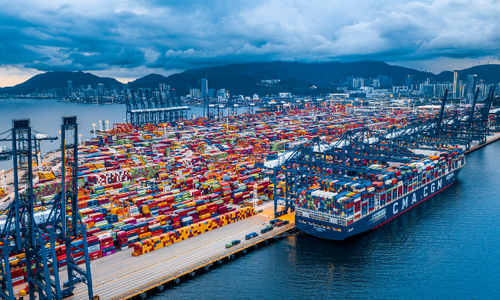
Companies across Asia are tying up more cash in inventories than businesses anywhere else in the world as geopolitical tensions and supply-chain risks reshape corporate finance, according to new research from Allianz Trade.
Asian companies are operating with the world’s longest cash conversion cycle (CCC), underscoring how geopolitical uncertainty is forcing businesses to hold larger inventories and commit more capital to day-to-day operations.
According to Allianz Trade’s latest Working Capital Requirements study, the region’s average cash conversion cycle reached 70 days in 2025, exceeding every other major economic region and remaining well above the global average of 67 days.
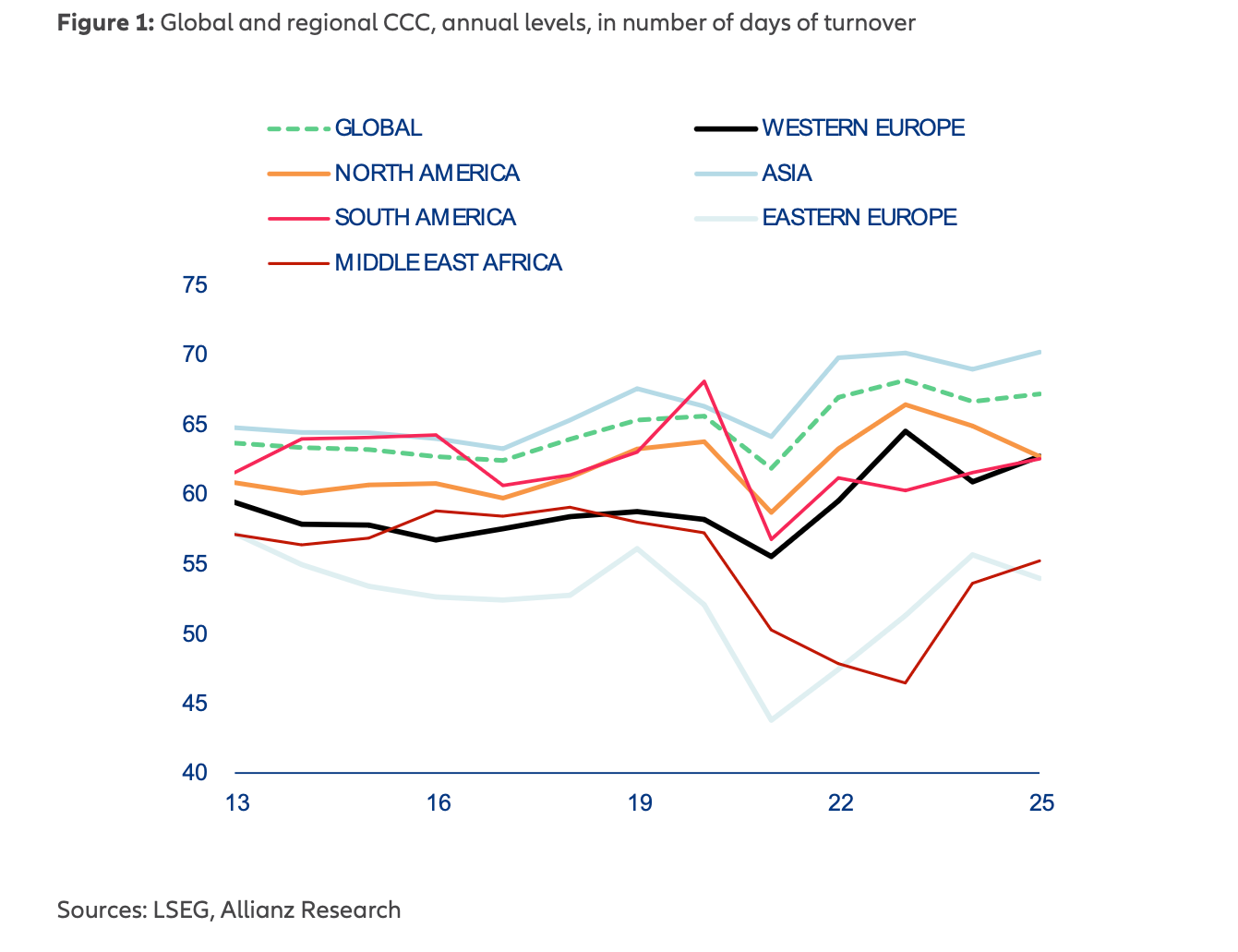
The cash conversion cycle measures how long it takes for companies to convert cash invested in operations back into cash generated from sales. A longer cycle typically translates into higher financing needs and greater pressure on corporate liquidity.
From efficiency to resilience
The report argues that the shift is no longer cyclical but structural.
Instead of optimizing supply chains solely for efficiency through «just-in-time» production, companies are increasingly adopting «just-in-case» strategies by building larger inventory buffers to protect themselves against geopolitical conflicts, trade fragmentation and supply-chain disruptions.
As a result, inventories have become the dominant driver of working-capital requirements. Allianz estimates that inventory levels now explain nearly 80 percent of the global cash conversion cycle and more than 90 percent of its changes since 2021.
Electronics and manufacturers under pressure
The trend is particularly pronounced across several sectors that play a central role in Asia’s economy.
Electronics, automotive suppliers, pharmaceuticals, textiles, machinery and metals all continue to require substantial working capital as companies increase inventory holdings while facing longer production cycles and elevated supply-chain risks.
By contrast, industries benefiting from structural investment trends, including computers, telecommunications and parts of the digital economy, have managed to improve working-capital efficiency despite the uncertain geopolitical backdrop.
China bucks the regional trend
The study also highlights considerable differences within Asia.
While the region as a whole records the highest cash conversion cycle globally, China reduced its cycle during 2025, pointing to more efficient working-capital management despite ongoing economic headwinds. Other Asian markets, including Japan, experienced further increases, illustrating the diverse financing conditions across the region.
More pressure expected
Looking ahead, Allianz Trade expects global working-capital requirements to rise further during 2026.
The insurer believes companies will continue expanding strategic inventories as governments and businesses strengthen energy security and supply-chain resilience. Continued investment in artificial intelligence infrastructure and data centers should partially offset these pressures, but not enough to reverse the broader trend.
For corporate treasurers and lenders alike, the result is likely to be sustained demand for working-capital financing as more cash remains tied up on balance sheets for longer periods.