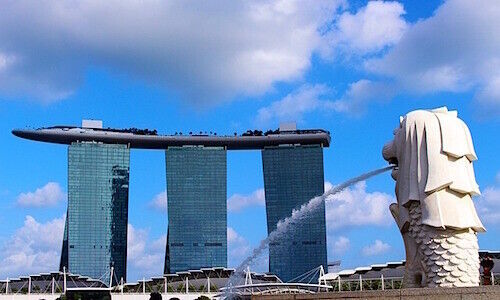
Singapore Tops Global Crypto-Friendly Cities Ranking
Singapore has been named the world's most crypto-friendly city in the newly released Crypto Friendly Cities Index 2026, published by borderless living platform Multipolitan, highlighting Asia-Pacific's growing influence in the global digital asset economy.
The report ranked cities based on regulatory clarity, tax efficiency, institutional infrastructure and real-world cryptocurrency adoption. Six Asia-Pacific cities secured positions in the global top 10, reinforcing the region's emergence as a leading destination for digital asset investors, entrepreneurs and infrastructure providers.
Singapore claimed the top spot by combining a clear regulatory framework with favorable tax policies, strong institutional participation and growing cryptocurrency payment adoption. The city-state outperformed established financial centres such as London and New York, according to the index.
«Singapore's lead reflects a broader structural shift in global finance,» said Nirbhay Handa, CEO of Multipolitan. «Crypto competitiveness is increasingly defined not by speculation, but by regulatory predictability, operational infrastructure and capital efficiency.»
The rankings point to a broader eastward shift in the centre of gravity of the cryptocurrency industry. Alongside Singapore, Hong Kong, Bangkok, Seoul, Kuala Lumpur and Taipei all ranked among the world's top 10 crypto-friendly cities.
Broader Eastward Shift
Multipolitan said the strong performance of Asian cities was driven by clearer licensing regimes, expanding stablecoin and exchange-traded fund (ETF) frameworks, digitally savvy consumer populations and increasingly competitive tax environments. Hong Kong has continued to strengthen its position through its virtual asset exchange licensing regime and growing range of institutional investment products, while Thailand's regulatory sandbox initiatives and crypto-related tax incentives are emerging as significant draws for investors and businesses.
Outside Asia, Dubai also ranked highly, supported by its zero personal income tax regime and regulatory framework overseen by the Virtual Assets Regulatory Authority (VARA).
The report argues that low tax rates alone are no longer enough to establish a competitive digital asset hub. Instead, leading jurisdictions are increasingly distinguished by a combination of legal certainty, transparent governance, accessible licensing pathways and institutional-grade infrastructure.
According to Multipolitan, cities that scored highest consistently demonstrated what it described as a «low tax, high credibility» model, balancing innovation-friendly policies with regulatory oversight. In contrast, some traditional financial centres face challenges from more complex compliance requirements that can slow innovation and capital formation.
A key focus of the index was the existence of functioning crypto infrastructure rather than announced policy ambitions. The report highlighted examples including Singapore's regulated stablecoin framework, Hong Kong's spot virtual asset ETFs, Dubai's licensed virtual asset service provider ecosystem and growing integration of digital assets into merchant and government payment systems.
Infrastructure Creates Durable Advantage
«Policy creates headlines, but infrastructure creates durable advantage,» Handa said. «The jurisdictions leading this next chapter are those where crypto works in practice, not just in theory.»
The findings suggest that digital wealth is increasingly flowing toward jurisdictions that combine financial innovation, governance and mobility. For investors, founders and globally mobile families, location is becoming an increasingly important factor in maximizing returns, reducing operational friction and accessing future growth opportunities.
As competition intensifies among cities seeking to attract digital asset businesses and capital, Multipolitan said the future of cryptocurrency is becoming increasingly shaped by geography and regulatory environments, despite the industry's decentralized origins.
«The future of crypto is no longer simply decentralized,» the report concluded. «It is increasingly jurisdictional.»