Christian Nolting: «US and China Need Each Other»
While geopolitical worries loom large, Deutsche Bank’s Christian Nolting believes cooperation could be underway between the world’s two largest economies due to a mutual need.
Under US President Donald Trump, unpredictability has been the norm for geopolitics worldwide. After military action in Venezuela and threats against Greenland and Iran, Washington has followed up positive news in the form of a trade deal with India involving cuts on the main tariff from 25 percent to 18 percent. But a critical question remains regarding the upcoming policy stance on China.
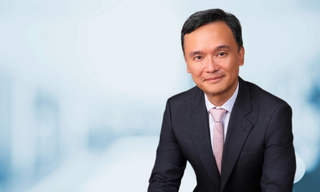
According to Deutsche Bank Private Bank global chief investment officer Christian Nolting, there’s reason to be optimistic.
«Eventually, there needs to be agreement […] because the US and China need each other,» he said in a virtual media briefing.
AI and Rare Earths
For the US, artificial intelligence (AI) already accounts for approximately 1 percent of economic growth in addition to other contributions, such as improved productivity or cost efficiency in other sectors. Although it is the leader in this field, continuously powering its expansion requires advanced chips made from key components like rare earth, where China dominates market share, including 59 percent of mining and 91 percent of refining.
«There's also a visit planned in April, where President Trump is visiting China, which I think is rather cooperative than fighting each other in a way on tariffs,» he added.
No Bubble for Markets
On financial markets, investors have become jittery about whether or not AI is currently a bubble waiting to burst. While benign geopolitics may help, Nolting believes interest rates are the «red line» that have historically triggered corrections on booms and Deutsche Bank does not forecast rate cuts from major central banks except in Japan.
«That's why we are saying AI is not in a bubble at this point in time. It’s still a boom. But we need to really watch not only shifts – we need to look at the whole value chain,» he said, highlighting the bank's preference to move away from investments in chips to other areas like rare earth magnets.