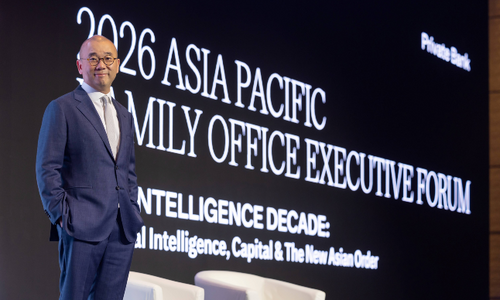
Citi: Asian Family Offices Are Becoming More Institutional
Asia’s family offices are becoming more sophisticated and institutional in how they invest and manage wealth, according to Citi. The US bank is seeing wealthy families expand beyond traditional wealth preservation into direct investments, governance and succession planning.
Asian family offices are increasingly adopting structures and investment approaches traditionally associated with institutional investors, according to Citi Private Bank.
The US bank highlighted the trend at its annual Asia Pacific Family Office Executive Forum in Hong Kong, which brought together more than 150 family office principals, next-generation leaders, investors and industry executives.
According to Citi, family offices across Asia are becoming more global in their outlook while broadening their activities beyond preserving family wealth. Direct investing, philanthropy, family governance and preparing the next generation are gaining importance.
More than 1,900 family office clients
Citi's Global Family Office Group currently serves more than 1,900 family office clients worldwide.
«We continue to observe family offices taking a more institutional approach to investing and governance,» Bernard Wai, Head of Asia for Integrated Client Solutions and Global Family Office at Citi Wealth, said.
At the same time, artificial intelligence is emerging as another factor influencing investment decisions and the way family offices operate.
«While AI creates new opportunities to enhance efficiency, long-term success continues to be defined by strong leadership, trusted relationships and preparing future generations to steward wealth responsibly,» Wai added.
AI reshapes capital allocation
Citi expects AI to have implications that extend well beyond the operational efficiency of family offices.
«Artificial intelligence is reshaping capital allocation, business models and competitive dynamics globally,» Dawn Nordberg, Head of Integrated Client Solutions and Global Family Office at Citi Wealth, said.
For wealthy families, investment and governance decisions made over the coming decade could therefore have significant implications for both investment opportunities and the transfer of wealth to future generations, she added.
The forum, held under the theme «The Intelligence Decade: AI, Capital and the New Asian Order,» also addressed geopolitical developments, direct investing, succession planning and philanthropy.
Speakers included Brookfield CEO Bruce Flatt, EQT Chair Jean Eric Salata and Kioxia CFO Yoshihiko Kawamura.
Hong Kong targets family offices
Citi also used the gathering to underscore Hong Kong's role in the Asian wealth management industry as competition between financial centers for family office assets intensifies.
«Hong Kong continues to strengthen its position as one of Asia's leading wealth management and family office hubs,» Horace Yip, Head of Hong Kong at Citi Private Bank, said.
The city has made attracting family offices an important part of its strategy to expand its wealth management sector. For global private banks, the increasingly sophisticated requirements of Asian family offices are also creating opportunities across investment banking, markets, asset management and private banking.