
Malaysia’s Ascent: Resilient Performer as the World Recalibrates
As global growth holds steady amid geopolitical friction and shifting policy priorities, Malaysia stands out as a picture of relative stability. In its «Global Focus – Economic Outlook 2026», Standard Chartered describes a world navigating an «uneasy calm», where resilient headline growth masks a profound transition from export-led momentum to domestically driven expansion.
In its latest outlook, Standard Chartered expects global growth in 2026 to remain firm at 3.4 percent, unchanged from 2025, even as the drivers of expansion evolve. The front-loading of exports ahead of tariffs and aggressive monetary easing powered growth in recent years, but 2026 marks a pivot toward fiscal policy and investment-led demand.
Trade policy uncertainty, geopolitical flashpoints, and the risk of market corrections continue to loom, particularly for open economies exposed to global trade and capital flows.
Asia’s Pivot – Investment Replaces Exports

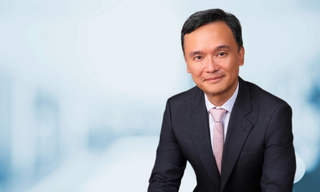
Edward Lee, chief economist at Standard Chartered (Image: LI)
Across Asia, export momentum is expected to moderate as the effects of front-loading fade. However, resilient consumption and a pickup in investment – especially in AI-related sectors such as semiconductors and data centres – should cushion the slowdown, said Edward Lee during a media briefing on Thursday in Singapore.
«Malaysia is among the beneficiaries of this shift, alongside Taiwan, Korea and Japan, as global capital increasingly targets technology infrastructure and high-value manufacturing in the region,» Standard Chartered’s chief economist and head of FX, ASEAN and South Asia, added. Singapore’s northern neighbour was the top-performer in ASEAN last year.
Easing, Not Weakening
Standard Chartered forecasts Malaysia’s growth to ease slightly to 4.5 percent in 2026, from an upgraded 4.7 percent in 2025, placing it at the upper end of the government’s official forecast range.
The moderation reflects slower export activity as global trade normalises, rather than any deterioration in domestic fundamentals.
Mining activity and favourable base effects are expected to support growth into 2026, while inflation is projected to remain benign at around 1.7 percent, reinforcing macroeconomic stability.
Labour Strength Underpins Consumption
Household consumption remains a central pillar of Malaysia’s outlook. Employment growth, record-high labour-force participation and steady wage gains are expected to sustain spending into 2026.
Public-sector wage increases and targeted cash transfers should further support lower-income households, even as subsidy rationalisation continues.
This balance between consolidation and social support underscores the authorities’ focus on reducing leakages without undermining demand, Lee explained.
Riding the AI and Data-Center Wave
Investment is set to remain a key growth engine. Approved investments reached MYR 384 billion in 2024, with manufacturing and data-centre projects playing an increasingly prominent role.
Commitments linked to semiconductors and digital infrastructure not only anchor near-term activity but also strengthen Malaysia’s medium-term growth potential by embedding the economy deeper into global technology supply chains.
Policy Mix
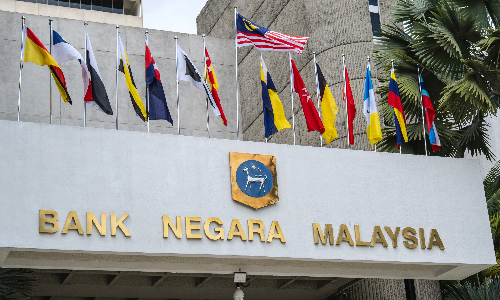
Malaysia's Central Bank (Image: Shutterstock)
With growth and inflation well contained, Bank Negara Malaysia is expected to keep the policy rate on hold at 2.75 percent throughout 2026. Fiscal policy, meanwhile, remains on a consolidation path, with the deficit projected to narrow further as subsidies are rationalised and non-oil revenues improve.
This policy discipline reinforces investor confidence at a time when markets are increasingly sensitive to fiscal space and debt dynamics across emerging markets.
Fundamentals in Focus
Malaysia’s external accounts are expected to remain in surplus, supported by strong tourism receipts and investment income repatriation, even as capital-goods imports rise.
The ringgit is likely to be underpinned by these fundamentals, with Standard Chartered expecting it to slightly outperform other low-yielding Asian currencies in 2026, despite global volatility and index-related portfolio adjustments.
Steady Ship in Uncertain Waters

(Image: Standard Chartered)
In a world grappling with policy transitions and geopolitical uncertainty, Malaysia’s outlook is defined less by headline acceleration and more by balance and resilience.
Stable growth, contained inflation, and sustained investment position the economy to navigate global headwinds without losing momentum.
«As 2026 unfolds, Malaysia’s steady course may prove to be one of its greatest competitive advantages,» Edward Lee concluded.