
Malaysia’s AI Moment – A New Investment Cycle Emerges
Malaysia’s capital markets are entering a decisive phase as artificial intelligence, sustainability, and policy execution converge into a new investment cycle.
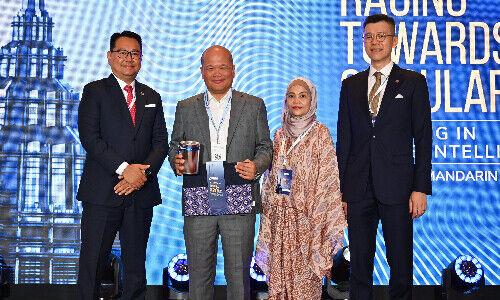
At its 18th Annual Malaysia Corporate Day 2026, CGS International Securities Malaysia positioned the year ahead as an inflection point where technology-led growth shifts from ambition to balance-sheet reality, reframing how investors assess productivity, competitiveness, and long-term value creation.
Following Malaysia’s ASEAN chairmanship in 2025, 2026 marks what market participants increasingly view as an execution year. National strategies outlined in the 13th Malaysia Plan (2026-2030) transition from policy design to implementation, particularly under the AI Nation framework.
For investors, this transition matters because it signals clearer capital allocation pathways into digital infrastructure, advanced services, and high-value industries that are expected to underpin earnings growth over the medium term.
Economic Singularity as an Investment Lens
The conference centred on the idea of an economic singularity – the point at which technological progress, especially AI, becomes an irreversible driver of productivity and capital flows.
This framing resonates with institutional investors seeking structural rather than cyclical themes. AI adoption is no longer viewed as an optional efficiency enhancement, but as a core determinant of valuation multiples, cost structures, and long-term competitiveness across various sectors.
AI, Productivity, and Capital Market Valuations
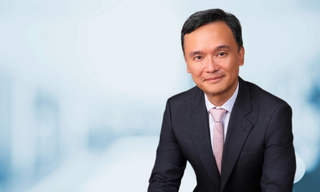
In his keynote address, Tan Sri Shahril Ridza Ridzuan underscored how technology is redefining value creation itself. He noted that investors increasingly reward organisations able to demonstrate scalable intelligence, operational agility, and robust digital infrastructure.
According to him, «artificial intelligence is emerging as the next great multiplier for productivity and economic growth», reshaping how capital markets price future-ready companies.
Human Capital at the Core of the AI Equation
Beyond technology spend, the discussion emphasised human capital as a critical pillar of AI strategy. Rather than displacing labour, AI is positioned as an enabler of new competencies, mobility, and participation.
«AI is not about replacing people but about augmenting human capabilities», Tan Sri Shahril said, highlighting the need for governance, risk awareness, and skills development to ensure that productivity gains translate into sustainable corporate performance.
Policy, Infrastructure, and Regional Competitiveness
From a macro perspective, the transition toward an AI-smart economy demands forward-looking policy, public–private collaboration, and sustained investment in digital infrastructure.
These elements are central to Malaysia’s ambition to move up the value chain, attract higher-quality foreign direct investment, and strengthen its position within ASEAN’s broader energy transition and technology ecosystem.
Capital Market Themes in Focus
Panel discussions highlighted themes already influencing fund flows – currency dynamics linked to a potential ringgit boost, carbon taxation, data centre expansion, and Carbon Capture, Utilisation and Storage.
For financially savvy investors, these areas represent tangible channels through which policy direction, sustainability priorities, and AI-driven demand could feed into earnings visibility and sector re-rating over time.
CGS MY’s Strategic Repositioning
Against this backdrop, CGS International Securities Malaysia outlined its own transformation from a traditional stockbroking model into an integrated financial services platform spanning investment banking, private wealth, asset management, and advisory.
CEO Khairi Shahrin Arief Baki said the firm’s evolution mirrors broader capital market shifts, noting that «Racing Towards Singularity reflects a fundamental shift in how economies, industries, and capital markets are evolving».
Structural Reforms Amid Global Uncertainty
While global volatility remains a constant, CGS MY pointed to Malaysia’s improving investment quality and reform momentum as stabilising forces. Structural reforms, clearer policy direction, and innovation-led growth strategies provide a framework for investors seeking durable returns rather than short-term trades.
The message from the conference was clear – collaboration between government, corporates, and capital markets will be essential to convert technological progress into sustainable shareholder value.
Why It Matters for Investors Now
For a financially savvy audience, the significance of Malaysia’s race toward economic singularity lies in timing. As AI adoption, sustainability policy, and capital market infrastructure align, valuation narratives are shifting.
The opportunity – and the risk – is in identifying which sectors and companies can translate intelligence investments into consistent cash-flow, governance strength, and long-term competitiveness in a rapidly evolving regional landscape.