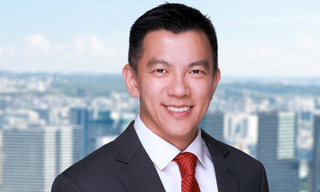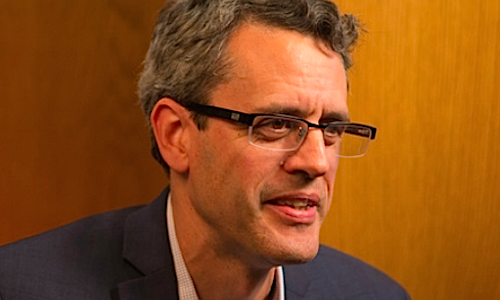

Horacio Barakat: «Innovation in Asia is Uniquely Regulator-Driven»
Not all financial centers see alignment between the industry’s desire for innovation and the regulator’s complementary efforts but this is the case in Asia, according to Broadridge’s Horacio Barakat.
While fintech is advancing in leaps and bounds, rapid adoption by the industry requires parallel efforts by regulators, especially for large institutions that would prefer to avoid risks. Prior to the current Trump administration, for example, many players often cited the lack of regulatory clarity in the US as a key obstacle for the digital asset market.
In contrast, Asian regulators have been a relatively complementary force, according to Horacio Barakat, Broadridge’s head of digital innovation. Hong Kong has its virtual asset regime and freshly introduced rules for stablecoins while rival hub Singapore also has its own guidelines for digital token service providers.
«Financial innovation in Asia is uniquely regulator-driven. A lot of activities, especially in Hong Kong and Singapore, are driven and sponsored by their monetary authorities. And that’s probably what makes these markets so vibrant because the best way to innovate is to actually incentivize and motivate risk-averse institutions to experiment,» said Barakat in an interview with finews.asia.
«One of the biggest challenges for digital assets is to make sure regulations keep up with innovation.»
Tokenized Repos
One particular area of focus within digital asset markets for Broadridge has been the tokenization of repos – short-term repurchase agreements of securities – through its Distributed Ledger Repo (DLR) platform. Last month, it processed an average of $368 billion in daily repo transactions during November, marking a 466 percent year-on-year increase, with volumes totaling $7.4 trillion. The platform has 15 clients and it supports asset classes including US Treasuries and UK Gilts.
According to Barakat, tokenized repos are more operationally efficient than traditional transactions because of reduced errors and enhanced precision via smart contracts. This even enables other use cases like intraday repos which currently undergo a «very clunky» process to execute.
«DLR simplifies repo transactions from front to back by tokenizing the collateral, locking it into a custodial or depository location and changing ownership based on smart contracts. This eliminates the need to manually deliver collateral back and forth to create more velocity for that asset,» Barakat explained. «This type of technology is especially beneficial for markets like repos because there is an immediate impact being felt from improved liquidity due to the sheer volume.»
Asian Expansion
Moving forward, Broadridge is seeking to expand the DLR platform into Asia with an enlarged offering that could include local repos like Japanese government bonds or China government bonds.
«Another benefit from adoption [of DLR] is the ability to address some of the friction caused by the different time zones between Asian, European and US counterparts that results in under-utilized liquidity,» Barakat added.
«For example, an Asian institution can use the platform to leverage liquidity to fund activity for American counterparts which they are unable to do in the traditional market because the opening hours are over.»