Sanctions: The Endgame for Cuba's Cigars
On October 14, 2025, a US federal indictment against Chen Zhi was unsealed. Washington put him on the famous OFAC sanctions list the same day, and London acted in step, leaving the British importer Hunters & Frankau largely inoperable overnight.
According to the trade portal «Cigars-Connect», it took more than six months before a license from the British authorities allowed the importer to do something approaching normal business again. Hunters & Frankau did not respond to the portal's inquiry, and the Office of Financial Sanctions Implementation does not comment on individual cases as a matter of principle.
Separate EU Sanctions
Along with Chen Zhi, and more than 100 further companies from his empire, the US also sanctioned his Prince Holding and the company Simply Advanced, registered in the British Virgin Islands with its seat in Phnom Penh. That is the BVI company which, presumably via further intermediate steps, holds Hong Kong's Asia Uni Corporation, which in turn holds Madrid's Allied Cigar Corporation — precisely the strand that leads to the 50 percent stakes in Habanos and Altabana.
The EU sanctioned Chen Zhi and his Prince Holding separately, and only on July 30, 2026.
In January 2026, Chen Zhi was arrested in Cambodia and transferred to China, where he has been formally in custody since July 6, 2026, awaiting his trial or trials. He has not been convicted anywhere so far (the presumption of innocence applies).
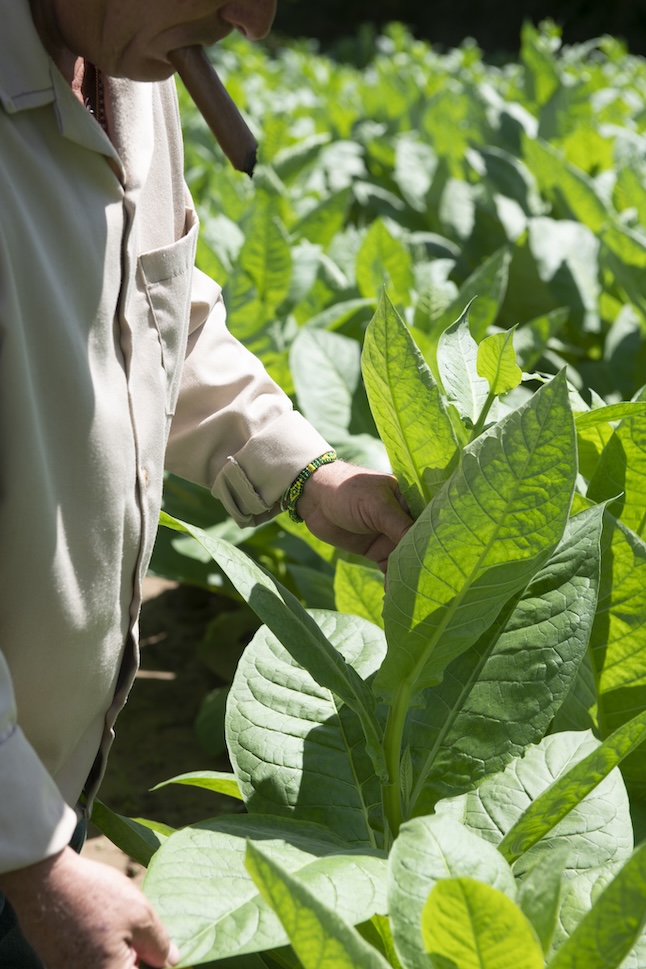
Tobacco field in Cuba. (Image: Courtesy)
Collapse in Slow Motion
What followed was a collapse in slow motion. Thirty companies in the British Virgin Islands have been in provisional liquidation since January 2026; in May, Hong Kong froze assets of more than 8.94 billion Hong Kong dollars. In Madrid, the group subsidiary Tabacalera took refuge in pre-insolvency protection at the end of February 2026 — not because business was bad, but primarily to rid itself of its owner, Chen Zhi. Credit lines had apparently been canceled as well.
That subsidiary also carries a stake in Tabacalera de García in the Dominican Republic, probably the world's largest factory for hand-rolled premium cigars, which was likewise unable to operate for a time because of the US sanctions and laid off a large part of its workforce.
The Liquidators Are in Charge
At the end of May and the beginning of June 2026, two partners of the British restructuring firm Interpath, Paul Pretlove and David Standish, joined the boards of Allied Cigar, Tabacalera and ITI Cigars; Pretlove took the chair at all three. This became possible because a court in the British Virgin Islands had appointed three Interpath partners as provisional liquidators over 30 companies of Chen Zhi's Prince empire on January 9, 2026.
Since then, the group has been visibly working to trade its way back into business by means of the court-enforced separation from Chen Zhi.
Licenses for the US and Britain
A time-limited license from OFAC, the US sanctions authority, has allowed the Tabacalera group to do business with American companies again since the spring; the Tabacalera de García factory in the Dominican Republic and Flor de Copán in Honduras have apparently been able to supply Altadis U.S.A. and JR Cigar in the US again since May 2026.
The Spanish newspaper «El Confidencial», which revealed the arrangement in May, gives the term as running to 2028, and to 2031 for a parallel British license. OFAC does not publish specific licenses; Tabacalera's communications department in Madrid confirmed both. Whether deliveries are in fact taking place again is doubted in some quarters.
Asia-Pacific is being served again as well, after the banking relationships and invoicing were rerouted to the regional joint venture partner there.
In the EU, It Is Only Beginning
In the EU, by contrast, the blockade is only beginning. The sanctions regulation directly covers Chen Zhi and his Prince Holding alone. Brussels requires banks to examine ownership and control case by case for every subsidiary that is not listed. German banks did so, and, as can be seen, they came out restrictive. 5th Avenue itself speaks of a «compliance and sanctions review» concerning one of its shareholders. Calculated through the entire structure, however, Chen Zhi owns just over 20 percent of 5th Avenue.
By now, the liquidators of Allied Cigar, Tabacalera and ITI Cigars in Spain, and the insolvency administrator of 5th Avenue in Waldshut, hold de facto control over Chen Zhi's stakes and shareholder rights.
Switzerland Has Not Adopted the EU Sanctions
Switzerland gets off as the fortunate third party. Bern has not followed the EU listing; the human rights sanctions program under which Chen Zhi would be covered does not exist here at all.
Intertabak, which according to Spanish commercial register filings earned a profit of 21.8 million euros in 2024, has apparently been spared drastic measures so far; no restrictions have become known. (Altabana in Madrid maintained three banking relationships in 2024: Bankinter, Banca March and BBVA; in Asia-Pacific, as noted, all banking relationships were handed to the regional joint venture partner.)
The outlook for the globe-spanning Cuban cigar empire remains uncertain in any case. How matters stand on the Cuban side became clear in February, when Habanos canceled the Festival del Habano 2026. Officially, this was done to «preserve the standards of excellence that distinguish this prestigious international gathering».
Cigar Festival Canceled in Early 2026
The event is Cuba's shop window, a source of hard currency and the stage on which the regime presents its only intact world market product apart from rum.
But Washington has noticeably increased the pressure on Havana since the Venezuela intervention in early 2026. Tourism has collapsed, and what little economic activity was still there at the time is going through another painful contraction. No one talks any longer about the catch-up edition of the cigar festival announced for the fall of 2026. It will probably be canceled in 2027 as well.
Liquidators, sanctions lawyers, trustees and judges, meanwhile, are celebrating a festival of their own. The unraveling will take years.
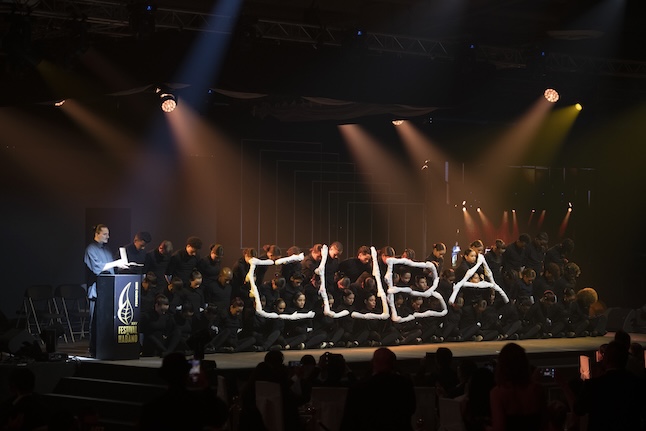
All spotlights on Cuba: gala night at the Festival del Habano 2025. (Image: Courtesy)
How Do the OFAC Sanctions Reach the Importers?
Not a single company in the cigar chain appears on a sanctions list, neither the factories nor the holdings nor the importers. What is listed is the owner, and that is enough: under the 50 percent rule, anything owned half or more by a sanctioned person is blocked, even where it is recorded nowhere. Anyone screening the companies' names against the lists therefore finds nothing — you have to know the ownership chain, and that chain ends in registers which publish no owners.
The American license covers Spain's Tabacalera and its subsidiaries, the two factories and the American distribution arm. Whether Altabana and the Habanos country importers, as 50 percent subsidiaries, are likewise part of the license is not known.
It is striking, in that light, that it was only the EU listing of late July 2026 that struck the European market. Under the 50 percent rule, the American sanctions could in principle have reached the regional import companies as well.
No internationally active bank can afford to ignore the OFAC lists.
But the rule works automatically only against known ownership. Anyone who screened 5th Avenue against the OFAC lists got no hit; anyone who checked its shareholder Altabana, no more so. That is not down to negligent banks but to the architecture of the anti-money-laundering rules.
Every bank must establish the beneficial owner, but the chain of holdings is not multiplied through in the process.
Softer KYC at a 50-50 Split
Germany's Money Laundering Act, like the Swiss banks' code of conduct on due diligence, carries an intermediate company's stake further only if a natural person controls that company with more than 50 percent. That is exactly where the chain breaks: at the end of 2024, ITI Cigars held precisely 50.0 percent of Altabana. No majority, no control, no tracing of the line under KYC rules.
In other words: while sanctions status theoretically passes down from the top through the 50 percent rule, KYC coming from the bottom no longer captures structures above a 50-50 split. It is probably this small blind spot that explains why the OFAC sanctions have not yet put any regional country importer in Europe into difficulty.
If one does the arithmetic anyway, Chen Zhi ends up at 22.8 percent of 5th Avenue (after the Altabana stake was raised to 80 percent at the end of 2025) and, on the last known quotas for 2024, at just 14.3 percent of Intertabak — both likewise below the 25 percent KYC reporting threshold. Both sets of rules then fall back on the substitute solution and record the managing officer. What stood in the files, correctly and by the book, was an operating manager in Switzerland or in Germany.
The Spanish Business Is Partly Frozen as Well
That the Madrid headquarters is by no means out of the woods was shown by Cigars-Connect: according to a report published by the portal only on Saturday, Spain's Dirección General del Tesoro had already frozen Tabacalera's accounts on July 30, 2026, the day of the EU listing.
Since then, every payment the company makes has to be approved by the authorities in advance, from supplier invoices to wages. The bank ING España had already ended the business relationship at the end of 2025, according to media reports.
A European license along American and British lines has been applied for, it is said.
Rescue From Abu Dhabi?
Where the Habanos joint venture might be heading is suggested by a player founded at the end of 2024. At the moment the sanctions and the other legal measures detonated, Renovaire Group Holding of Abu Dhabi held 42.9 percent of Zhi's Asia Uni Corporation in Hong Kong, the sole owner of Allied Cigar Corporation.
Spanish publications now treat Renovaire Group as the most likely destination for Chen Zhi's remaining 57.1 percent stake. But how is an owner sitting in a Chinese prison, sanctioned in the US and the EU, supposed to sell or transfer the rest of his shares? It will be worth watching what solution the liquidators devise.
The Structure Remains Vulnerable
Even if it proves possible to get rid of Chen Zhi as a shareholder, Cuban cigar production and its global distribution remain vulnerable.
One detail may illustrate the point: the Cuban state has hung its own stake in Altabana, a distribution business with more than 500 million euros in revenue in 2024, on a company in the Madeira free trade zone.
According to the Portuguese commercial register, that company belongs to two natural persons resident in Cuba — presumably front men for a regime whose time is slowly but surely running out.
The ownership chain in one picture: follow the layered international structure behind the Cuban cigar business on our separate data page.
- << Back
- Page 2 of 2