
Singapore Fund Managers Position for Volatility, Rate Cuts and AI at Scale
Singapore-based fund managers are entering 2026 with guarded confidence, betting on Asia’s resilience even as geopolitical risks harden into a permanent market feature.
According to the latest Investment Managers’ Outlook Survey by the Investment Management Association of Singapore (IMAS) published on Tuesday, respondents expect volatility to persist but see compelling opportunities in select Asian markets, supported by monetary easing, technology adoption and valuation discipline.
A clear majority of respondents anticipate policy relief from the United States, with 69 percent expecting the Federal Reserve (Fed) to cut rates by more than 0.5 percent by year end.
At the same time, confidence in central bank independence is fraying – 60 percent fear political pressures may increasingly influence monetary policy decisions, a concern likely to shape asset allocation and risk management strategies.
Japan and China Lead Asia’s 2026 Conviction Trades
Within Asia, Japan and China emerge as joint top picks, each identified by 21 percent of fund managers as potential outperformers. India follows at 13 percent, while Singapore and Taiwan each attract 11 percent.
Notably, optimism around China is not driven by expectations of faster GDP growth – 61 percent do not foresee acceleration – but by attractive valuations, targeted policy support and sector–specific opportunities.
Equities Favoured Across Asia and the US
Risk appetite remains constructive. 72 percent of respondents expect the MSCI Asia ex-Japan Index to rise between ten percent and 20 percent by late 2026, while 73 percent project similar gains for the MSCI China Index.
In the US, 54 percent forecast a 10 percent to 20 percent increase in the S&P 500, reflecting confidence that earnings momentum can offset macro uncertainty.
Singapore Assets Offer Stability and Yield
Closer to home, nearly 90 percent of managers expect the Straits Times Index to strengthen or remain stable, underpinned by resilient earnings, attractive dividends and government initiatives to revitalise the equity market.
On currencies, expectations are mixed but skewed toward mild weakness, with 46 percent anticipating the USD-SGD pair to fall by five percent to ten percent.
Gold Shines While Oil Stays Range-Bound
In commodities, gold retains its appeal as both a hedge and a return asset. Half of respondents expect gains of 12.5 percent to 25 percent, and almost 90 percent see prices either rising or holding steady.
Oil, by contrast, is expected to remain largely range–bound, with 46 percent forecasting flat prices and 25 percent looking for a modest five percent to ten percent increase.
AI Moves from Experimentation to Execution
Artificial intelligence (AI) has crossed a critical threshold. More than half of surveyed managers are already deploying AI in core investment activities, including research generation and fund commentary.
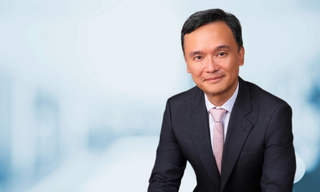
As IMAS Chairman Jenny Sofian noted on Tuesday, «the focus is now on scalable business models and the practical deployment of AI to deliver measurable productivity gains», as firms respond to margin pressure and operational complexity.
Operational Efficiency Drives Technology Adoption
Productivity improvement and cost reduction are the primary motivations behind AI investment.
Beyond front-office decision making, fund operations, middle-office functions, and research are seeing the most significant transformation, signalling a broad-based shift from pilot projects to enterprise-wide execution.
Structural Pressures Test Market Durability
While passive investing and fee compression remain long–standing concerns, a new risk has surfaced – doubts over the sustainability of strong market performance following 2025’s rally.
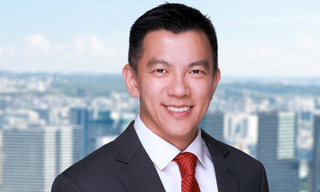
According to IMAS Development Committee Chair Thomas Kaegi, managers are responding by becoming «far more selective», prioritising AI-driven productivity, private assets, and leaner operating models over broad expansion.