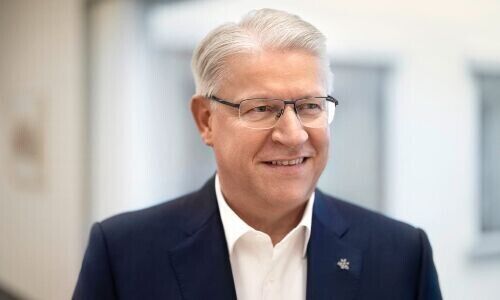
Markus Ronner: «Size Alone Does Not Constitute a Risk»
The debate concerns a maximum of 25 billion francs in additional capital—less than 2 percent of UBS’s total balance sheet. Given this relatively small proportion, why do you oppose it?"
UBS is already one of the best-capitalized banks worldwide. Due to the CS acquisition, it must already hold an additional $17-19 billion in capital to close CS’s capital gaps and comply with the progressive TBTF (Too Big to Fail) capital surcharge required by existing regulations. If an additional 25 billion francs were added, the total additional capital would exceed 40 billion francs.
Equity capital is relatively expensive, with costs of around 10 percent, meaning 1 billion francs in additional annual costs for every 10 billion francs in capital.
«Equity capital is relatively expensive.»
How would the bank respond?
A significant portion of these costs would have to be passed on to the prices of services and products, including loans, to maintain reasonable profitability and thus competitiveness and attractiveness. This would also impact the Swiss market, particularly the conditions for businesses and households. We firmly believe that extreme measures would have the opposite effect of the intended goal. Specifically, they would weaken a bank’s competitiveness and, consequently, its resilience. Proponents of such extreme demands fail to consider these fundamentally important aspects. Anyone conducting an economic cost-benefit analysis of the maximum requirement would quickly and clearly abandon it.
UBS and the Banking Lobby often argue that the Swiss Financial Center must remain internationally competitive. Would 25 Billion francs more in Equity Capital really jeopardize UBS’s competitiveness? And is it worth sacrificing more security for the Swiss Economy?
The extreme demand for full deduction would result in a total of over 40 billion francs in additional capital due to the CS acquisition. UBS would have to hold approximately 17-19 percent core capital—about 50 percent more than required by current Swiss regulations and just as much more compared to its international peers. It is undeniable that this would significantly weaken competitiveness and cast doubt on UBS’s ability to sustain its strategy and profitable business model. Consequently, UBS would become less attractive to both investors and customers. Increased costs would lead to a substantial decline in expected profits, making UBS far less appealing in the capital market and potentially impacting financial stability. In times of crisis, shareholders serve as the first line of defense.
Isn't more capital the key issue in revising TBTF regulations?
In the broader discussion on security, the true cause of the CS crisis is unfortunately being overlooked. While more capital might have delayed CS’s collapse, it would not have prevented it. An unsustainable business model and mismanagement cannot be offset by capital alone. The discussion should therefore focus much more on sustainable business models, better governance, and improvements in early detection and, if a bank remains inactive, targeted and effective intervention by the authorities. I am also convinced that an excessive capital surplus, as demanded by the extreme proposal, would create a false sense of security and might even lead bank executives and regulators to miss the opportunity for timely and decisive intervention.
«The discussion should focus much more on sustainable business models.»
How crucial is the quality of equity capital in a crisis, particularly its form and availability? What key lessons have you learned from the past 20 years?
The Basel Committee on Banking Supervision and the Financial Stability Board, both headquartered in Basel, have learned from various crises. With the introduction of Basel III and TBTF requirements following the financial crisis, both the quality and quantity of capital have been substantially improved. Switzerland has taken a leading role in this regard by implementing a «Swiss finish» on global capital standards. Unfortunately, these requirements were not consistently enforced at CS, which has led to a misperception of the quality of Swiss capital standards.
What did UBS do better?
Under the leadership of Sergio Ermotti, UBS not only adjusted its strategy in 2012 but also significantly reduced its risk profile and made capital and liquidity strength central pillars of UBS’s business. As a result, UBS benefits from strong market confidence, evidenced by the low premiums on potential default risks. Thanks to this strong position, both the market and regulators worldwide supported UBS in managing the emergency takeover of CS.
- << Back
- Page 3 of 3