Why Most EAMs Never Scale Beyond USD 1 Billion
Asia’s EAM sector is expanding rapidly, but over half of firms remain below USD 1 billion AUM. Infrastructure, not performance, is the constraint.
Written by Andreas Mettenberger, Partner and Head of Synpulse Hong Kong
Across Singapore and Hong Kong, EAMs account for a growing share of wealth assets, supported by cross-border flows and rising UHNW populations. In Singapore alone, that share has increased from roughly 2 percent to around 8 percent over the past decade.
Despite this momentum, a consistent pattern is emerging: firms plateau at similar points in their growth journey, often when operational complexity begins to outpace the systems used to manage it.
An Operational Ceiling
Most EAMs remain below USD 1 billion in assets under management, with only a small group progressing beyond that level. The gap rarely comes down to investment performance. It reflects how firms operate. Fragmentation remains widespread. Multiple custodial portals, standalone tools, manual fee calculations, and reconciliations across banks create cumulative complexity. Relationship managers spend increasing time navigating systems, while operating costs rise alongside AUM.
Across EAM operating models, the same dynamic appears consistently: growth amplifies operational friction unless workflows, data, and execution are designed to scale together.
Where Connectivity and AI Fall Short
The industry response has centred on connectivity. Aggregation layers and APIs create a consolidated view across systems, improving visibility but not eliminating fragmentation. Workflows remain disconnected, data still requires validation across environments, and operational overhead persists. Complexity is redistributed rather than removed, continuing to constrain scale.
At the same time, interest in AI-enabled tools is accelerating across onboarding, compliance, and advisory support. Yet their impact remains limited in fragmented environments. Standalone solutions introduce additional steps, while outputs require reconciliation and manual validation, increasing coordination effort.
As explored in Synpulse’s perspective, AI delivers value when embedded within unified workflows where data, logic, and execution operate in the same environment. Without that foundation, AI expands operational complexity rather than reducing it, reinforcing the same structural constraints that limit growth.
What Scalable Infrastructure Looks Like
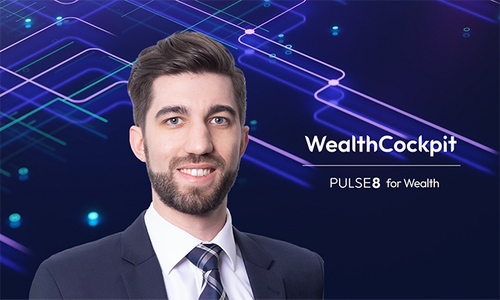
This shift is moving the industry from tools to infrastructure. Firms that scale successfully build operating models where systems, data, and workflows function as one. WealthCockpit, developed by Synpulse8, reflects this approach. It provides an integrated operating environment across custodians, bringing onboarding, portfolio oversight, fee management, and compliance into a single system with end-to-end workflows.
Data is created and used within the same context. Intelligence is embedded directly into workflows, supporting decisions, flagging exceptions, and accelerating execution without adding process layers. AI operates within this environment, supporting relationship managers, compliance processes, and advisory workflows in real time.
The result is a reduction in operational friction at scale, addressing the constraint that has historically limited EAM growth.
Implications for the Broader Ecosystem
Platform capability is becoming a factor in custodian selection as EAMs prioritise efficiency and integration. Firms that operate across multiple banks as a single, coordinated business gain a structural advantage. As the sector matures, the dividing line is clearer. Investment expertise remains essential. Operational execution at scale determines which firms progress beyond the USD 1 billion threshold.
EAMs that align workflows, data, and intelligence reduce fragmentation, enable consistent execution, and support growth without proportional increases in complexity. In a more complex operating environment, the limiting factor is no longer access to clients or capital. It is whether infrastructure can support the next phase of growth.
Our solutions: here